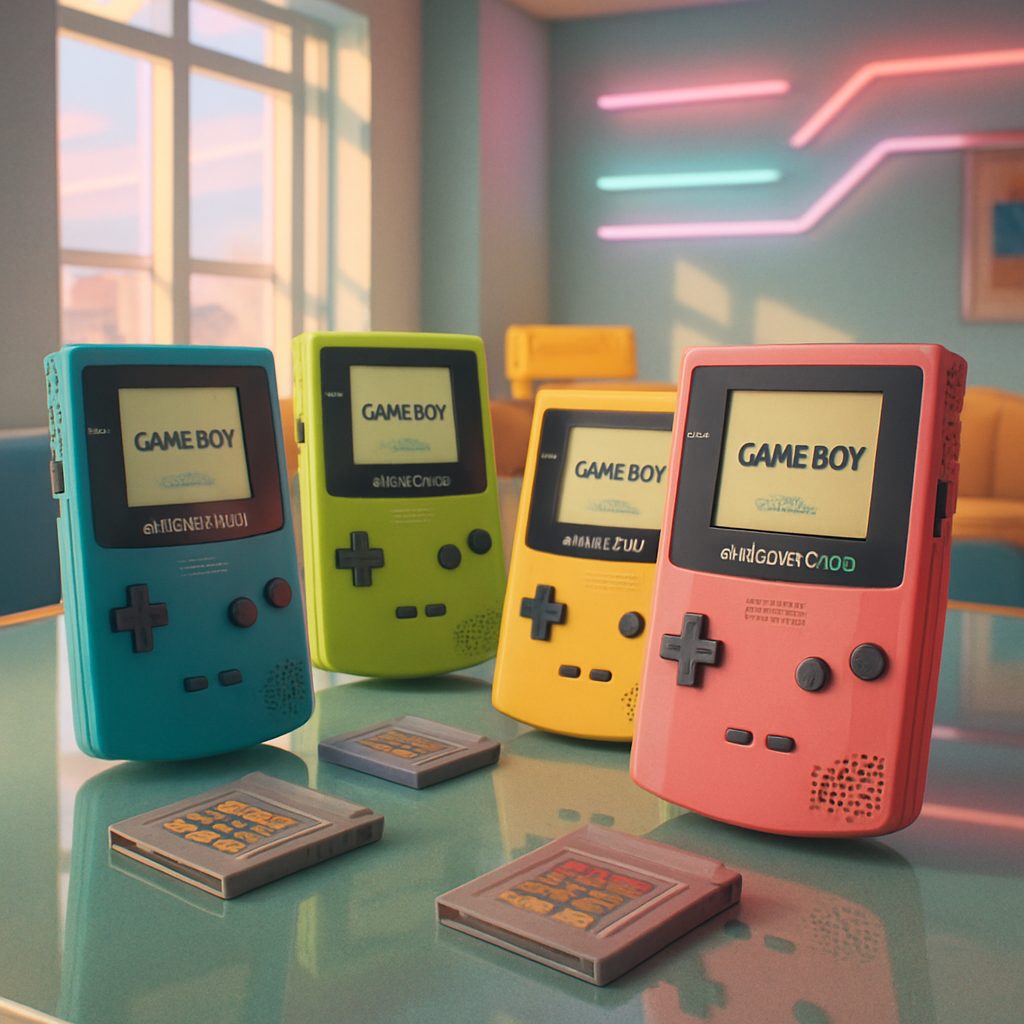
In 1998, Nintendo breathed new life into its iconic handheld by injecting a palette of over 32,000 shades. The Game Boy Color was not just a simple colored variant of the original Game Boy: it embodied technical and playful boldness, a balance between compatibility and modernity. This article traces its journey, from design to technical specifications, to its lasting impact on the video game world.
Sommaire
In Brief
🎨 With its screen capable of displaying 56 simultaneous colors out of more than 32,000 shades, the Game Boy Color transformed the portable experience.
⚙️ Powered by an 8 MHz Sharp LR35902 processor and equipped with 32 KB of RAM, it remained faithful to backward compatibility while delivering graphical punch.
🕹️ Released simultaneously with the Nintendo 64, it stood up to competition like the Sega Nomad and Neo Geo Pocket, relying on a catalog of timeless hits.
🌟 Inherited by the Game Boy Advance and celebrated on virtual consoles, its influence can still be felt in every new handheld console.
Genesis and Release Context
While the Nintendo 64 was about to redefine 3D gaming, the handheld branch was stuck with the original Game Boy’s monochrome screen. Nintendo decided to bet on an update without breaking with the vast existing library. Renamed Game Boy Color (GBC), the new console aimed to appeal both to loyal players and those attracted by modern aesthetics.
Development was carried out discreetly, with a major constraint: no software break. The bet was risky, but full compatibility guaranteed a massive and immediate launch.
Chromatic Innovation: From Shade to Clarity
Screen and Color Palette
For the first time, Nintendo integrated a TFT screen capable of displaying up to 56 colors at once, chosen from a palette of 32,768 shades. This limitation to 56 simultaneous colors resulted from a compromise between power consumption and display performance. In practice, each sprite could be rendered with unprecedented chromatic finesse on a handheld.
Interaction with Cartridges
A often overlooked detail: some GBC cartridges sent additional instructions to the graphics processor to exploit dynamic background palettes. Thus, games like Pokémon Gold and Silver adjusted colors according to the time of day, creating an immersive atmosphere.
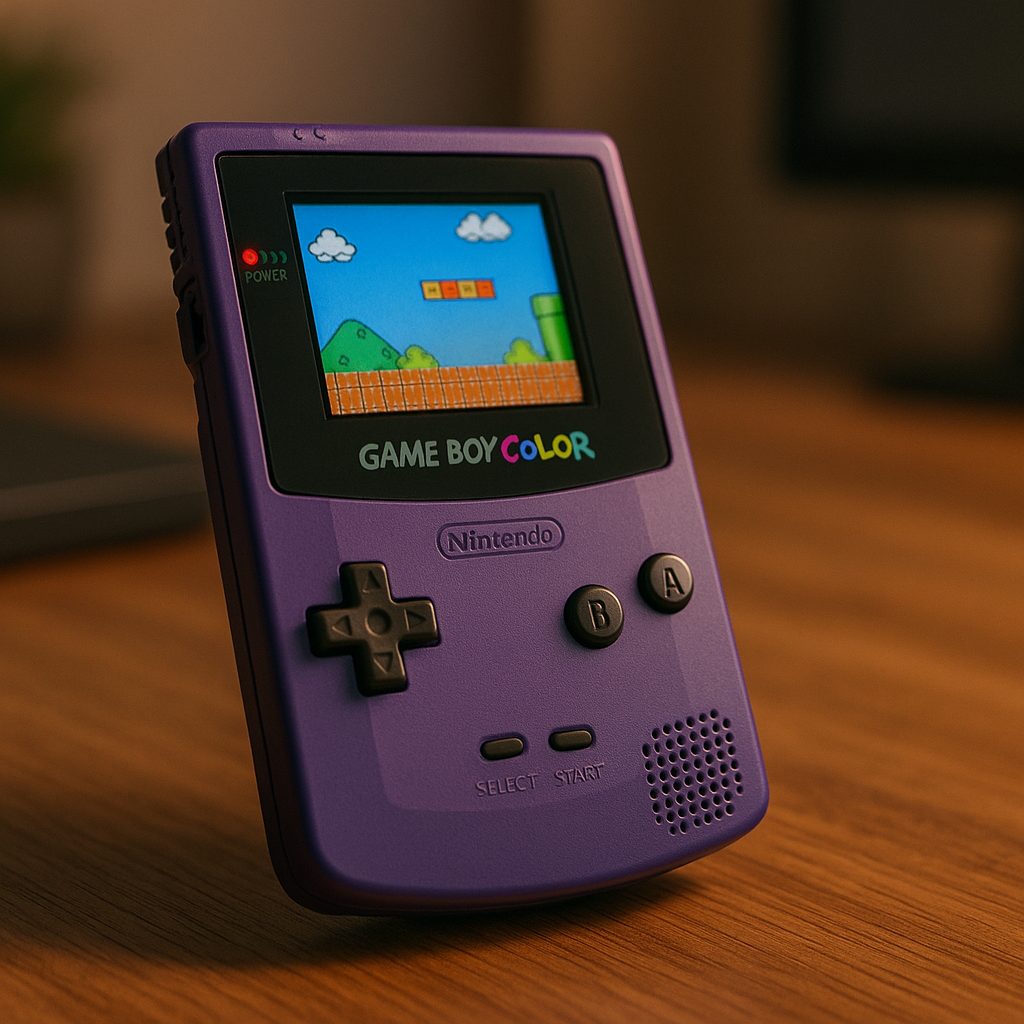
Technical Specifications
| Feature | Detail |
|---|---|
| Processor | Sharp LR35902 (8 MHz) |
| RAM | 32 KB |
| Video Memory | 16 KB |
| Screen | 2.32″ TFT, resolution 160×144 pixels, 32,768 colors |
| Media | Game Boy & Game Boy Color cartridges |
| Power Supply | 2 AA batteries (about 10 hours of gameplay) |
| Dimensions | 133 × 75 × 27 mm |
| Weight | 138 g (without batteries) |
Competition and Portable Landscape at the End of the 90s
Building on its momentum, Sega launched the Nomad, a pocket Mega Drive, while SNK offered the Neo Geo Pocket. However, these machines struggled to attract users: their libraries remained limited and the weight was often high. As for the first smartphones, they offered neither dedicated games nor ergonomics designed for gamers.
The strength of the GBC: a huge ecosystem, ranging from Super Mario Land 2 to The Legend of Zelda, including third-party licenses like Tetris and Final Fantasy. It is in this context that Nintendo positioned its console at the forefront of the next portable generation.
Impact on Console History
Beyond the simple shift to color, the Game Boy Color influenced the way a portable console was conceived: a balance between power, battery life, and catalog. To place this evolution in a broader context, one can explore the history of video game consoles, which shows how each generation builds on the achievements of the previous one.
In 2001, the Game Boy Advance directly inherited color and hardware innovations, paving the way for backlit screens and richer sound capabilities.
Legacy and Reissues
Today, the Game Boy Color remains prized by collectors and has been reissued as virtual mini-consoles on Nintendo 3DS and Switch Online. Romhacks and special editions continue to push the limits of its color palette, proving that it remains alive in the hands of enthusiasts.
FAQ
What is the screen resolution of the Game Boy Color?
The GBC displays 160×144 pixels on a 2.32-inch TFT screen, with 32,768 colors available.
Can you play all Game Boy games on the GBC?
Yes, it is backward compatible with the entire original Game Boy catalog, without loss of hue or speed.
How many colors can the console display simultaneously?
About 56 colors can be displayed on the screen at the same time, depending on the configuration of sprites and background.
