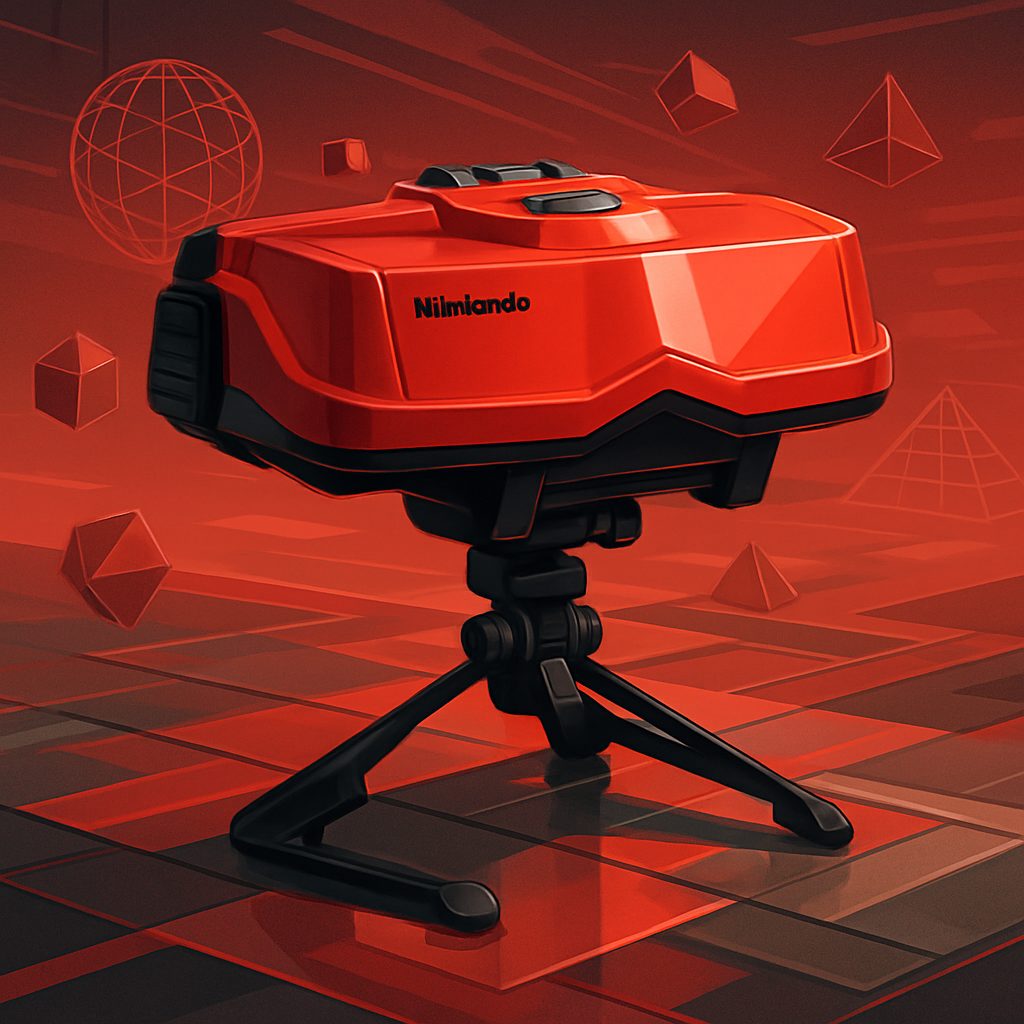
When Nintendo unveiled the Virtual Boy in 1995, the industry held its breath. After the worldwide success of the Game Boy, the Japanese company promised a revolution: true three-dimensional immersion without a bulky headset. Yet, this technological gem would become one of the most crushing failures in video game history, withdrawn from shelves after barely six months on the market. How did this pioneering console, designed by the inventor of the Game Boy, sink so quickly? Between excessive ambitions and physiological realities, the story of the Virtual Boy reveals the bold limits of an industry in full transformation.
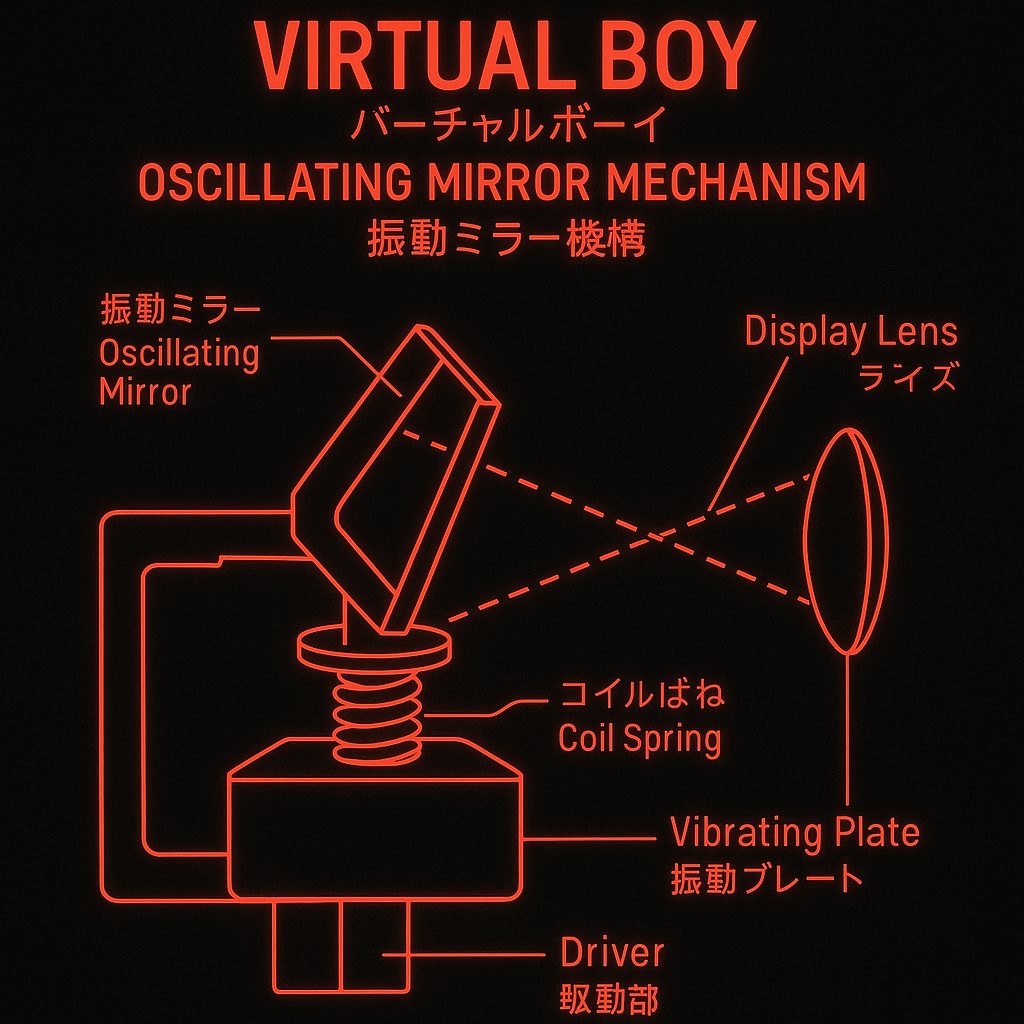
🚀 **Designed by Gunpei Yokoi**, the genius behind the Game Boy, the Virtual Boy used **oscilloscopes with vibrating mirrors** to create a revolutionary stereoscopic 3D effect. Its technology relied on two LED screens displaying only red on a black background.
⚠️ Its use caused **severe migraines** and **nausea** in 70% of testers within less than 30 minutes, according to internal Nintendo studies. The tripod design forced players to adopt an uncomfortable posture, face pressed against the viewer.
💸 Marketed at **$179** (equivalent to $360 today), it sold only **770,000 units** worldwide compared to 14 million for the emerging PlayStation. Only **22 games** were developed, none of which were blockbusters.
🔮 Despite its failure, its patents on stereoscopic display directly inspired the **Nintendo 3DS** two decades later, proving the visionary nature of its initial concept.
Sommaire
The genesis of a technological utopia
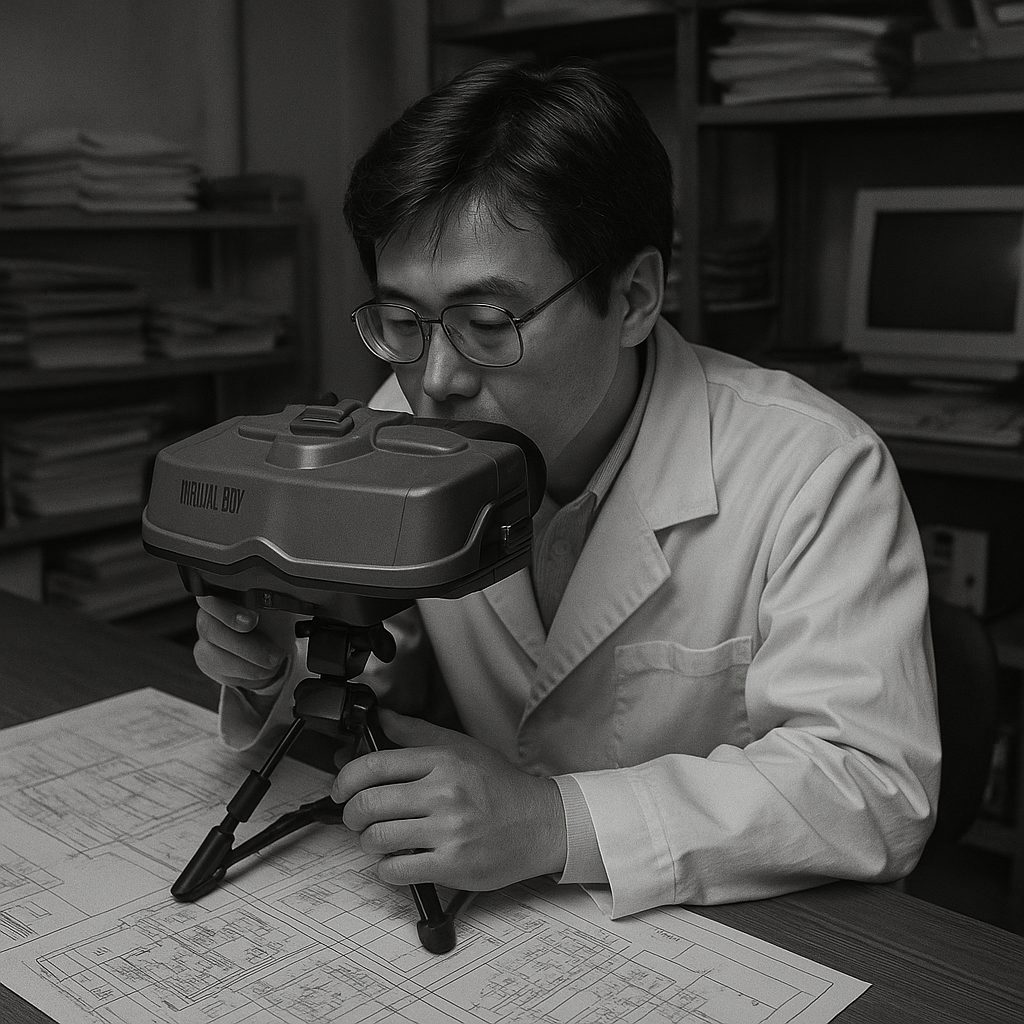
In 1991, Gunpei Yokoi, freshly crowned by the global success of the Game Boy, took on a reckless challenge: to create the first portable console capable of displaying 3D without special glasses. His team at Nintendo R&D1 experimented with prototypes using LCD screens but ran into latency and power consumption problems. The solution emerged from a chance encounter with Reflection Technology, an American startup holding a patent on a binocular display system with electroluminescent diodes. Their “Scanned Linear Array” promised immersive 3D thanks to a set of oscillating mirrors at 50 Hz, projecting a distinct image for each eye. Nintendo invested $25 million, convinced they held the next revolution.
The trap of the technology race
In the feverish context of the 90s, Sega and Sony were preparing revolutionary consoles. The Saturn and PlayStation were about to flood the market with unprecedented polygonal 3D capabilities. Caught in this race, Nintendo made two strategic errors: rushing development and cutting costs. Initially planned with polychrome display, the Virtual Boy was relegated to red monochrome to reduce manufacturing costs by 40%. A decision with heavy consequences: games were limited to shades of red and black, making environments visually oppressive. At the same time, the marketing department imposed a rapid launch to get ahead of Sony, sacrificing ergonomic testing and software library development.
Technical Sheet: Controversial Choices
| Component | Specifications | Competitor Comparison (1995) |
|---|---|---|
| Processor | NEC V810 32-bit at 20 MHz | PlayStation: R3000 33.8 MHz |
| Memory | 1 MB RAM + 512 KB VRAM | Sega Saturn: 2 MB RAM + 1.5 MB VRAM |
| Display | 2× LED screens 384×224 pixels (red/black) | Game Boy: LCD 160×144 pixels (4 shades of gray) |
| Media | Cartridges 1 to 4 MB | PlayStation: CD-ROM 650 MB |
| Battery Life | 6 AA batteries for 4 hours | Game Boy: 4 AA batteries for 35 hours |
This hybrid configuration reveals a fundamental inconsistency: although technically more powerful than the SNES, the Virtual Boy could not exploit its potential due to its display limitations. Its 32-bit processor handled graphics comparable to those of the previous generation, while the absence of stereo sound – replaced by a simple mono speaker – undermined immersion. Ironically, the Game Boy Color, released three years later with a backlit color screen, would surpass its technologically outdated predecessor.
User Experience: A Physiological Ordeal
From the first in-store tests, alarming reports poured in: players complaining of dizziness, persistent migraines, and temporary visual disturbances. Dr. Hiroshi Ohki from the University of Tokyo identified the mechanism involved: forced ocular divergence. Unlike modern 3D screens that overlay images, the Virtual Boy’s binocular screens created two distinct visual fields separated by 50 mm. The brain had to constantly adjust its convergence, generating intense neural fatigue. Nintendo tried to minimize these effects via warnings in the manual – “Take a break every 15 minutes” – but the damage was done. Parents even reported cases of diplopia (double vision) in children after prolonged sessions.
“It was like looking through a kaleidoscope in hell. After ten minutes of ‘Red Alarm,’ I felt like my eyes were bleeding.”
– Testimony from a player in GamePro Magazine (1996)
A Mixed Game Library
Only 22 official games were released, half of them exclusively in Japan. Among them:
- Mario’s Tennis (pack-in): a technical demo without a solo mode
- Virtual Boy Wario Land: considered the best title, but unrelated to the 2D series
- Teleroboxer: a boxing game awkwardly exploiting depth
- Red Alarm: a Star Fox clone made unreadable by interlaced red lines
The absence of flagship titles like Zelda or Metroid sealed its fate. External developers shunned the platform, scared off by its technical constraints. Squaresoft canceled a 3D RPG project, preferring to focus on the PlayStation. This lack of third-party support illustrates a paradox: Nintendo had created a machine without a creative community to sustain it.
Commercial Collapse and Its Lessons
The American launch in August 1995 turned into a disaster: only 140,000 units sold in four months. Nintendo attempted a desperate relaunch with a price drop to $99, then offered free games to buyers – without success. In March 1996, production was stopped. The failure cost Gunpei Yokoi his position, forced to resign despite his past contributions. Yet, this apparent fiasco holds valuable lessons:
The Hidden Legacy of a Pioneer
The technology patented by Nintendo for the Virtual Boy laid the foundations for autostereoscopic displays. The parallax barrier system, which allows the 3DS to display 3D without glasses, is a direct evolution of research on vibrating mirrors. Even the Oculus Rift owes much to its studies on visual comfort. Ironically, in 2011, Nintendo reused the name “Virtual Boy” to file a virtual reality patent, proving that some ideas are simply too ahead of their time.
FAQ: Nintendo Virtual Boy
Why did the Virtual Boy only display in red?
The green and blue LEDs of the time consumed three times more energy than the red ones. To preserve battery life and reduce costs, Nintendo sacrificed color.
Are there prototypes of canceled games?
Yes, including a “Dragon Quest,” a “Super Mario World 3D,” and a “Star Fox 2.” Some ROMs were recovered by enthusiasts, but none were completed.
Is it compatible with other consoles?
No. Its proprietary port and unique architecture make it incompatible even with later Nintendo consoles. However, emulators exist on PC.
How much does a Virtual Boy cost today?
Between €300 (console only) and €2000 (complete box with games). “Jack Bros,” the rarest game, alone reaches €1500.
The Virtual Boy remains a fascinating accident in video game history. Its commercial failure masks a subtler reality: it was a mobile laboratory for technologies that would shape the future. By trying to skip two generations at once, Nintendo stumbled, but its fall illuminated the path for others. It reminds us that in innovation, timing matters as much as the idea. The avenues it opened resonate today in VR headsets, proof that some defeats contain the seeds of future victories. To understand how this failure fits into the grand tapestry of the industry, discover the pivotal moments of the evolution of video game consoles, from the early days of Pong to today’s immersive revolutions.
