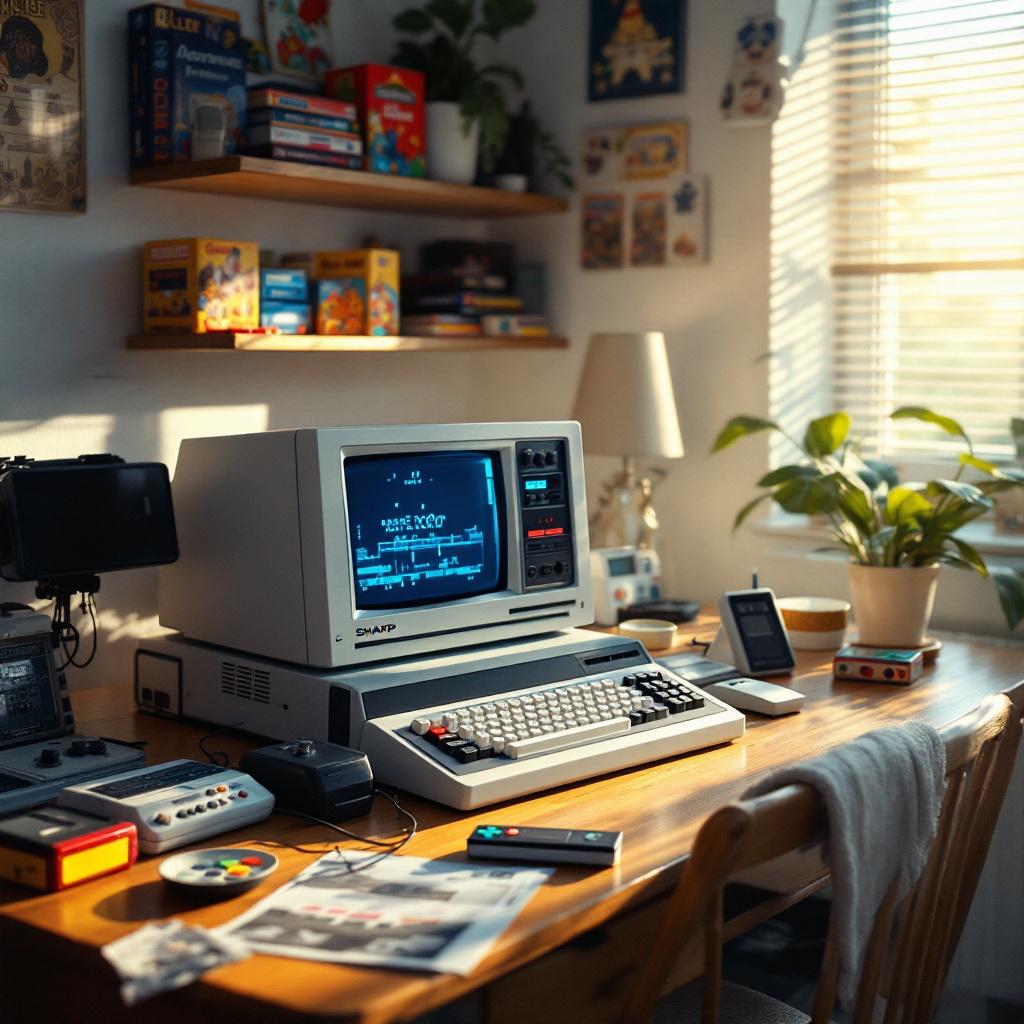
Born at the end of 1987 in Japan, the Sharp X68000 remains a legend among retro-gaming enthusiasts. Combining unprecedented power and astonishing fidelity to arcade cabinets of the same era, it captivated a niche of discerning amateurs before becoming a coveted item for collectors. Let’s dive into the genesis, architecture, and reasons that make the X68000 an ‘arcade perfect’ microcomputer and a rare gem.
🎮 Arcade Perfect: thanks to its Motorola 68000 processor clocked at 10 MHz and its graphics chip capable of displaying 65,536 colors, the X68000 reproduces arcade hits almost identically.
📊 Unique Architecture: coexistence of a single memory bus, ultra-fast blitter, and Yamaha sound chips recording up to 32 stereo channels.
🛠️ Homebrew and Preservation: an active community maintains translations, homemade cartridges, and emulators, ensuring the machine’s longevity.
💰 Collection: expect to pay between €500 and €1,500 for a complete unit in good condition, including joystick and original floppy disks.
Sommaire
Genesis and Context
An Avant-Garde Microcomputer
When Sharp unveiled the X68000, the microcomputer industry was already moving beyond 8-bit. To meet the expectations of the most demanding gamers, engineer Keiji Oki focused on an ambitious motherboard modeled on the architecture of Taito and Capcom arcade cabinets. By combining a fast memory bus with a dedicated graphics coprocessor (blitter), the X68000 allows smooth scrolling, multiple sprites, and transparency effects rare on home equipment. One might think it is a simple facelift of PCs of the time, but in reality, the manufacturer designed a platform resolutely focused on gaming.
Positioning in the Japanese Market
In 1980, Sharp already dominated the consumer microcomputer segment in Japan with the MZ-80K and the X1. To compete with NEC and its PC-98, the X68000 stands out with gaming-oriented connectivity: 9-pin joystick ports, RGB outputs, and FM Towns rival in audio and video quality. Although exclusive to Japan, the X68000 attracts the elite of developers and high-graphic-fidelity enthusiasts. This high-end positioning explains why, from the late 1990s, the machine disappeared from shelves, leaving collectors on alert.
Architecture and Technical Specifications
| Component | Characteristic |
|---|---|
| Main Processor | Motorola 68000 @ 10 MHz |
| Secondary Processor | Hitachi HD63701 @ 5 MHz (I/O and sound) |
| RAM | 1 MB (expandable up to 4 MB) |
| Graphics Chipset | Blitter, sprites, multi-layer scrolling, 65,536 colors |
| Audio | Yamaha YM2151 FM (8 channels) & PCM (4 channels) |
| Storage | 5.25″ 1.2 MB floppy drive, SCSI (optional) |
An “Arcade Perfect” Rendering
Iconic Games
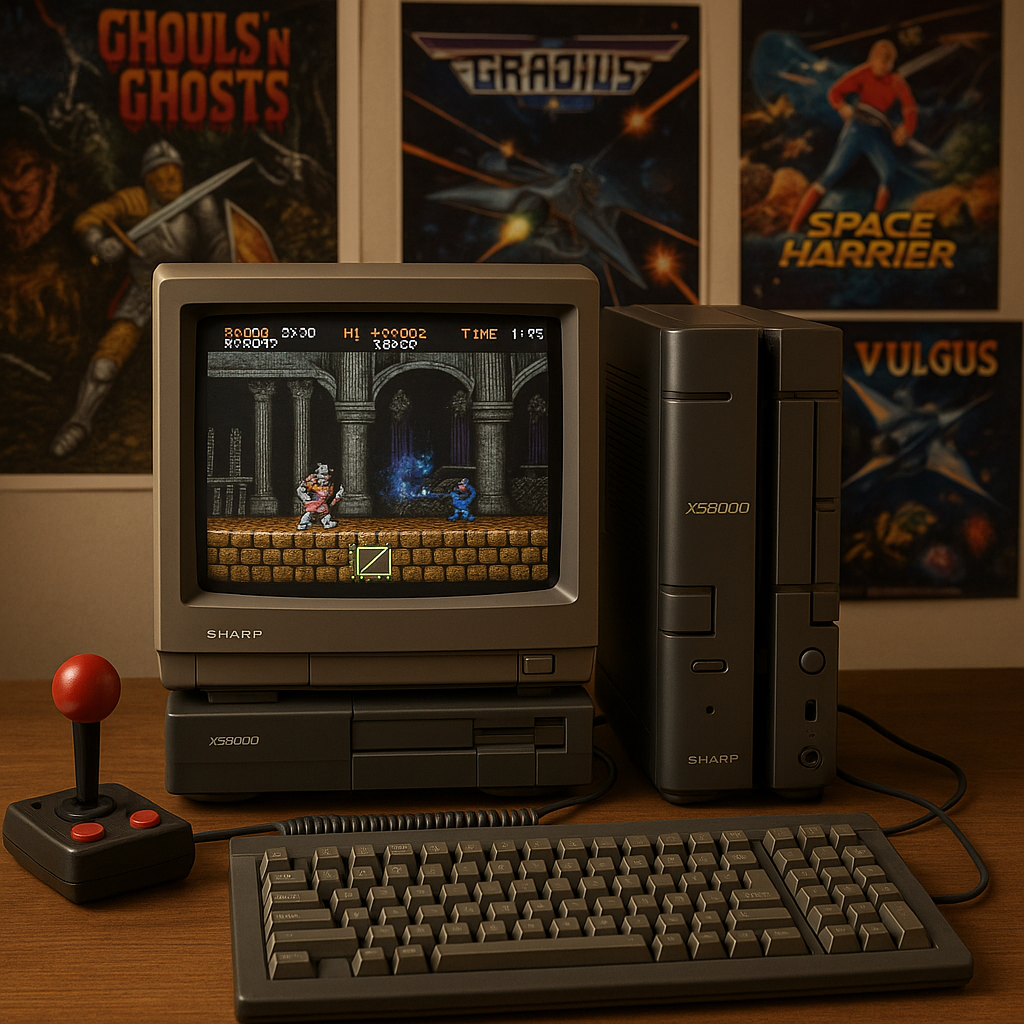
Titles like Final Fight, Strider, or Puzzle Bobble run uncompromisingly on the X68000. The graphics are copied frame by frame from the original arcade version, without slowdowns or missing pixels. This fidelity is explained by a close collaboration between Sharp and Capcom, who provide factory ROMs to the designers. Joking aside, it is this authentic touch that led some amateur developers to say that the X68000 was the most affordable arcade cabinet at home.
Audio and Visual Quality
The Yamaha chip reproduces FM layers with a precision rarely achieved on a home computer. Visually, the absence of tearing and support for the RGB signal offer sharpness worthy of arcade cabinets. The exhaustive color palette allows subtle transitions and convincing lighting effects, often cited as a technical lesson for the time. The only downside: the mandatory monitor screen remains difficult to find in optimal condition today.
The Community and Homebrew Scene
Fan Translations and Recent Projects
Alongside the official commercial offer, a handful of enthusiasts keep the spirit of the X68000 alive. New demos, adaptations of indie classics, and translations of obscure titles regularly emerge. There are also homemade cartridges (Flash RAM) allowing games to be loaded without using aging floppy disks. This revival fuels specialized forums and fairs, where maintenance tips and DIY modifications are exchanged.
Emulation and Preservation
It is hard to talk about the X68000 without mentioning MAME, the emulator that democratized access to its library. ROM dumps circulate in discreet communities, while preservation initiatives authenticate the hardware and document each BIOS version. This memory work extends the life of the machine and guides those who wish to (re)immerse themselves in this piece of video game history.
The X68000 in Collection
Availability and Price
Today, a very limited number of units are sold outside Japan. On specialized sites and auctions, a basic model in good condition sells for between €500 and €800. High-end configurations (memory expansions, SCSI hard drive, additional graphics card) can reach €1,500 or more. Original accessories (N30 Pro joystick, period floppy disks) often increase the price.
Buying Tips
- Check the proper functioning of the floppy drive (try several disks).
- Prefer machines equipped with an internal hard drive or a SCSI port for more flexibility.
- Check the condition of the power supply capacitors (risk of leakage after more than thirty years).
- Request photos of the RGB monitor and keyboard to ensure controlled wear.
- Negotiate a complete pack including joystick and original cables.
To place the X68000 in a broader historical perspective, do not hesitate to consult the evolution of gaming-dedicated machines from their beginnings to modern platforms, notably through a chronology of gaming computers that provides a comprehensive overview of technological transitions.
FAQ
- What makes the Sharp X68000 so special?
- Its architecture modeled on arcade machines and its graphics chip capable of displaying 65,536 colors without slowdown, offering an “arcade perfect” rendering.
- Can you still find original games for the X68000?
- Yes, some specialized Japanese shops and online platforms offer floppy disks and ROMs, but the homebrew community remains the most active source.
- What budget should be planned to acquire a complete model?
- About €500 for a basic setup, up to €1,500 for a complete pack with floppy disks, joystick, and expansions.
- How to maintain your X68000?
- Regularly check the power supply capacitors, slowly clean the floppy drive mechanism, and store the machine away from humidity.
