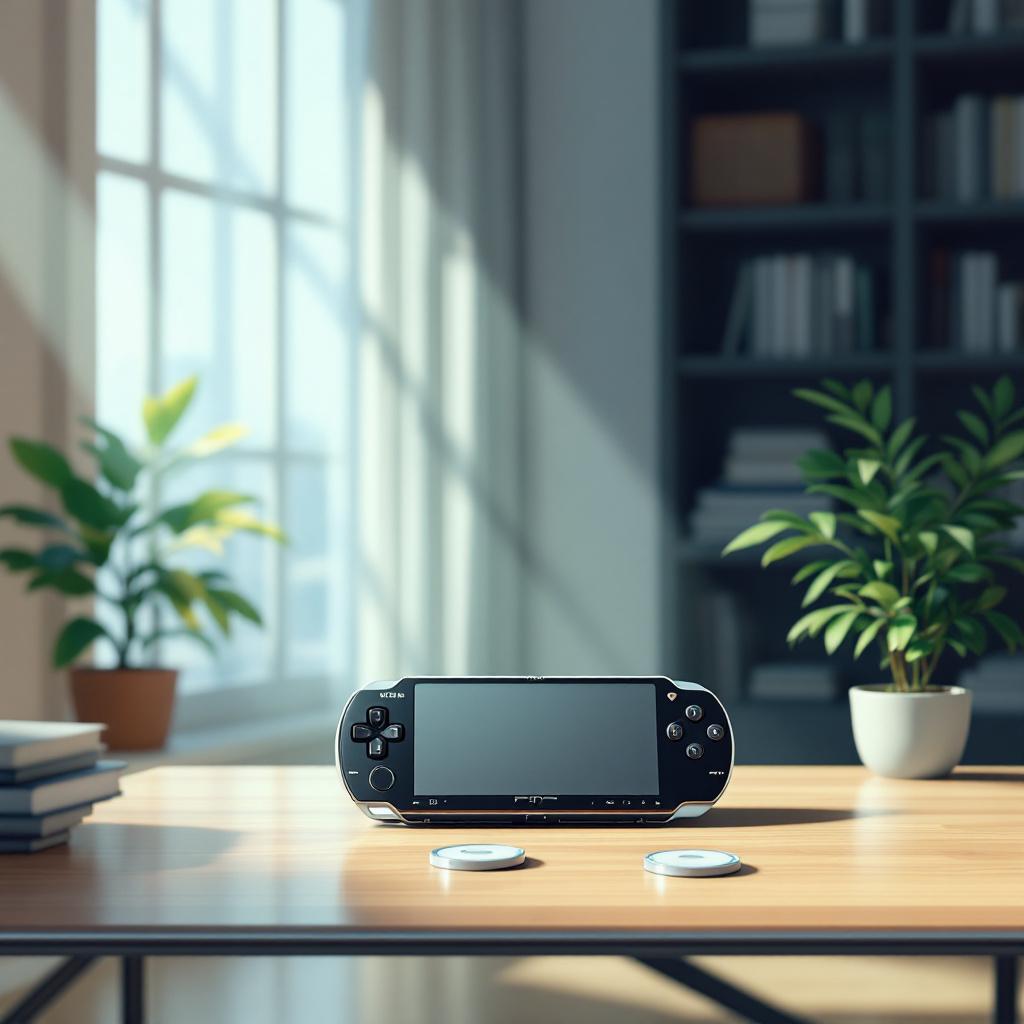
The PlayStation Portable (PSP) remains a landmark in the history of portable video gaming, largely thanks to its proprietary UMD (Universal Media Disc) format. However, at a time when optical drives were giving way to digital, this physical medium faced several obstacles that limited its adoption. This article examines the technical, economic, and cultural reasons that hindered the rise of the UMD.
Sommaire
In brief
🔹 1.8 GB capacity on a small circular disc: an achievement for the time, but a format already challenged by the advantages of all digital.
🔹 Built-in copy protection and compact design: two assets praised by publishers’ security, but penalizing durability and portability.
🔹 High manufacturing cost and game prices higher than cartridges or downloads, limiting consumer appeal.
🔹 Competition from the dematerialized market and rapid growth of mobile platforms reduced interest in a dedicated optical drive.
Origins and principles of the UMD format
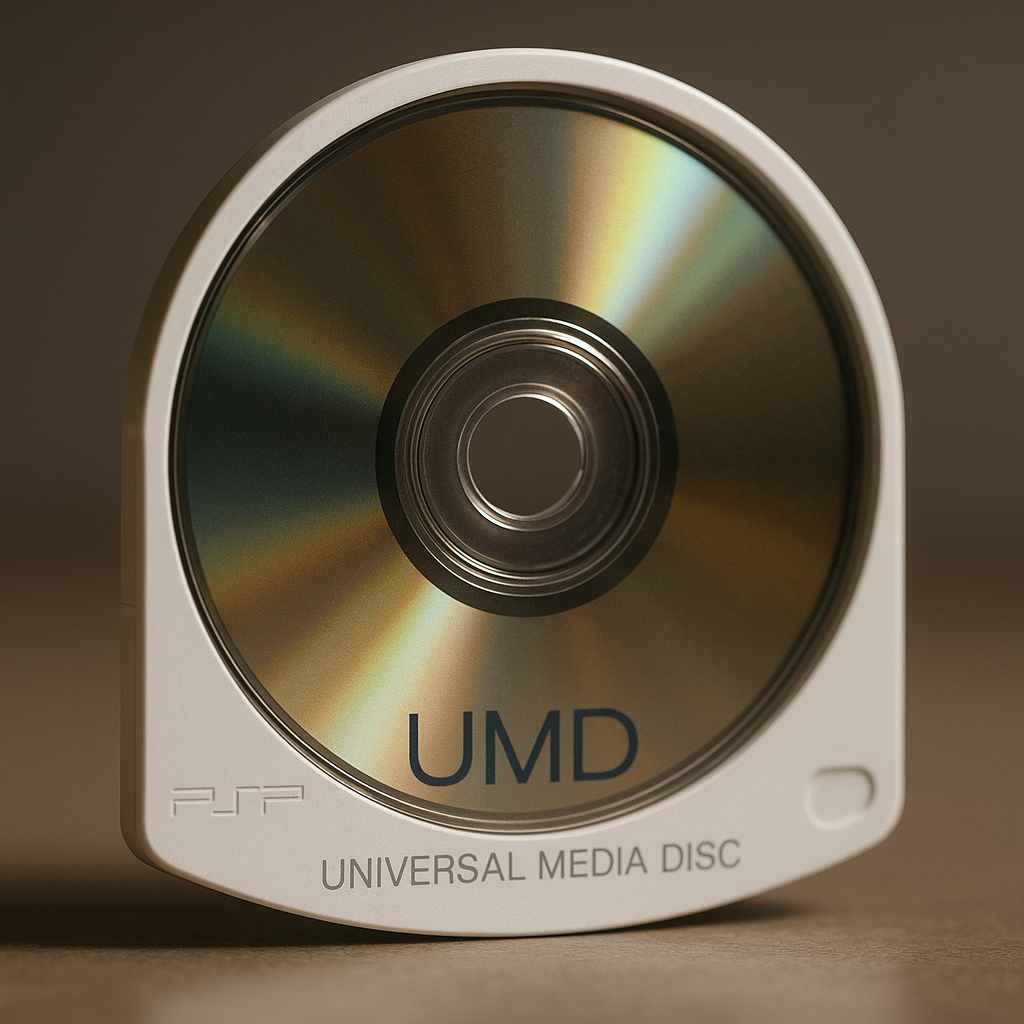
Sony unveiled the UMD in the early 2000s as a compromise solution between capacity and compactness. This 60 mm mini-disc, enclosed in a plastic casing, was designed to offer up to 1.8 GB of data – a leap compared to cartridges of competing portable consoles. On paper, this concept ensured storage of video sequences, high-quality audio tracks, and textures for games, while preserving portability.
A proprietary technology under high protection
The casing around the disc was not just a simple shell: it served as a mechanical barrier to protect the medium from scratches and prevent direct access to the disc. Combined with specific encryption, this copy protection lock aimed to reassure publishers in the fight against piracy. However, this same reinforced protection complicated production and increased the final price for consumers.
Between capacity and mechanical constraint
In practice, the UMD opening mechanism remains delicate. To change games, one must handle a small side latch, watch for the reader alignment, and avoid dust. After a few months of use, many reported micro-jams or less precise reading, especially after drops or transport in a bag without a rigid case.
The strengths of the UMD: capacity and security
Large capacity for the time
With 1.8 GB, the UMD easily surpasses SNES, GBA, or Nintendo DS cartridges, which often cap below 1 GB. This space frees developers: cinematics, dubbed voices, detailed textures, and additional content find their place without excessive compression. It is clear that in design, Sony aimed for a multimedia medium rather than a simple game disc.
Copy lock
Unlike classic CDs or DVDs, the UMD could not be read on a computer. The anti-piracy process relied on integrated encryption keys, discouraging the emulator community. While this system offered peace of mind to studios, it also complicated the supply chain: each unit underwent stricter controls, lengthening production times.
Barriers to Adoption
Production Costs and Sale Price
Compared to a cartridge, a UMD is more expensive to manufacture: plastic casing, special disc, reinforced reading system. Sony partially passes these costs on to the player: the average price of a PSP game often reaches €45. For comparison, a GBA title could barely exceed €30 at the same time. This price difference creates a psychological barrier, especially since the PSP installed base remained smaller than that of Nintendo consoles.
Less Robustness Compared to Digital
The shift to digital on PC and, later, on mobiles highlighted the convenience of no physical media. The sometimes faster loading times and the absence of having to carry a case in your pocket weigh heavily in the balance. Against these advantages, the UMD proves to be more fragile, slower, and less flexible: no instant access to an archive library.
Portability Limitation
On smartphones or tablets, you can carry hundreds of games without space constraints. Even the PSP reader, though compact, requires keeping cases, fearing dust or breakage. Ultimately, the UMD sits between the cartridge – solid and fast – and digital – universal and instant – but excels in neither.
Comparison with Other Media
To provide a complete overview, it is enlightening to position the UMD against the cartridge, CD, DVD, or download. A summary table highlights the trade-offs:
| Media | Capacity | Robustness | Average Price | Portability |
|---|---|---|---|---|
| Cartridge | 16–512 MB | Excellent | €30 | Very convenient |
| UMD | 1.8 GB | Average | €45 | Convenient |
| CD/DVD | 700 MB–4.7 GB | Fragile | €5–15 | Moderate |
| Digital | Variable | — | Variable price | Ultimate |
This comparison also refers to a overview of media formats to deepen the understanding of market evolution.
Legacy and Lessons for the Future
The UMD format remains an example of an interesting compromise, but the era of fully digital has left only a limited place for optical drives in the portable world. Several lessons are drawn: users demand simplicity and speed, production costs influence purchases, and portability is not limited to size but also to access flexibility.
Today, the PSP is viewed as a relic of the pre-smartphone era. Developers studying this generation realize how much digital distribution has redefined engagement, freeing creators from mechanical constraints and paving the way for new economic models.
FAQ
Why did the PSP choose the UMD format?
Sony aimed for a medium denser than the cartridge, capable of hosting videos and higher quality sound, while maintaining a compact design. The UMD represented an unprecedented compromise between capacity and size.
What alternatives might have worked better?
Online distribution from the launch, via a secure download service, would probably have reduced costs related to physical media and boosted adoption. High-speed cartridges, more robust, already offered an experience without an optical drive.
Was the UMD used anywhere other than on the PSP?
No, Sony reserved this format for its portable console. Outside the PSP, no other machine adopted this technology, which confined it to a role of industrial curiosity.
