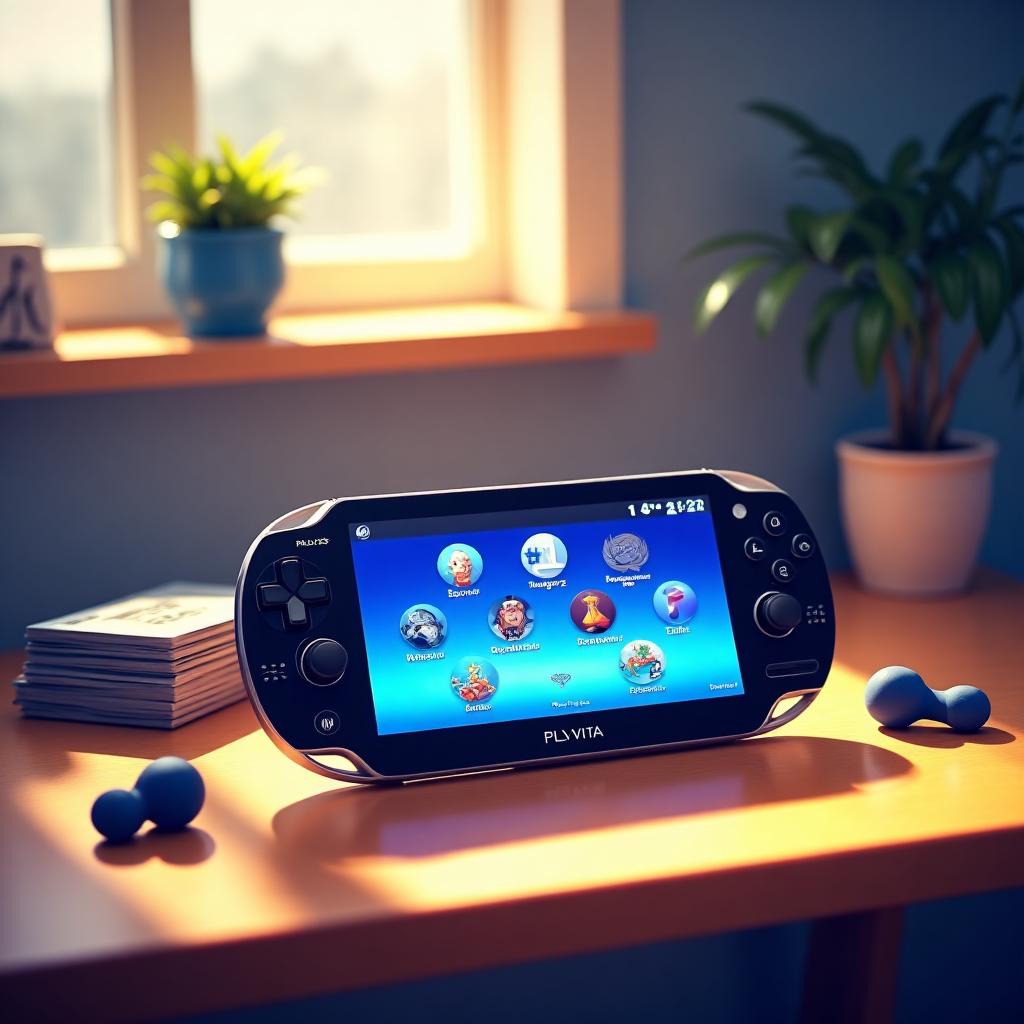
Released at the end of 2011, the PlayStation Vita represented a breakthrough in the world of portable consoles, blending display technologies, living room interconnection, and independent creativity. Its OLED screen, Remote Play compatibility, and the rise of a homebrew community thus forged an ambitious machine, at the crossroads between mainstream and passionate hackers.
🔍 OLED Screen offering deep contrasts and saturated colors for an immersive visual experience.
🎮 Remote Play: a smooth connection with the PlayStation 4, opening the door to mobile gaming on a 5-inch screen.
🛠️ Active homebrew scene, based on a powerful processor and a modular firmware, conducive to emulators and utilities.
📊 Technology and competition: facing the Nintendo 3DS and emerging smartphones, the Vita stands out by its finish and network features.
Sommaire
Genesis and market positioning
After the success of the PSP, Sony wanted to go further: to offer both a visual rendering worthy of a home console and rich interconnection. The adoption of an OLED screen, already present on some high-end smartphones, aimed to differentiate from the Nintendo 3DS’s LCD screen. But beyond simple definition, it was the overall experience – ergonomics, touch interface, analog sticks – that had to attract a hybrid audience, between dedicated gamers and newcomers seeking mobility.
The OLED screen: vibrancy and responsiveness
A panel with vibrant colors
Unlike classic LCD screens, OLED integrates each pixel as an independent light source. Result: deep blacks, bright whites, and a rich color palette. On the Vita, the effect is appreciated on titles like Uncharted: Golden Abyss, where lush vegetation and water reflections gain in realism.
Responsiveness and consumption
The responsiveness of an OLED panel, with very low latency, improves the feeling of fluidity, especially in first-person shooter games. On the battery side, the impact is nuanced: while deep blacks allow some pixels to be turned off, very bright scenes consume more. In the end, one remains close to the 4 to 5 hours of continuous gameplay announced by Sony.
Remote Play: the bridge between living room and mobility
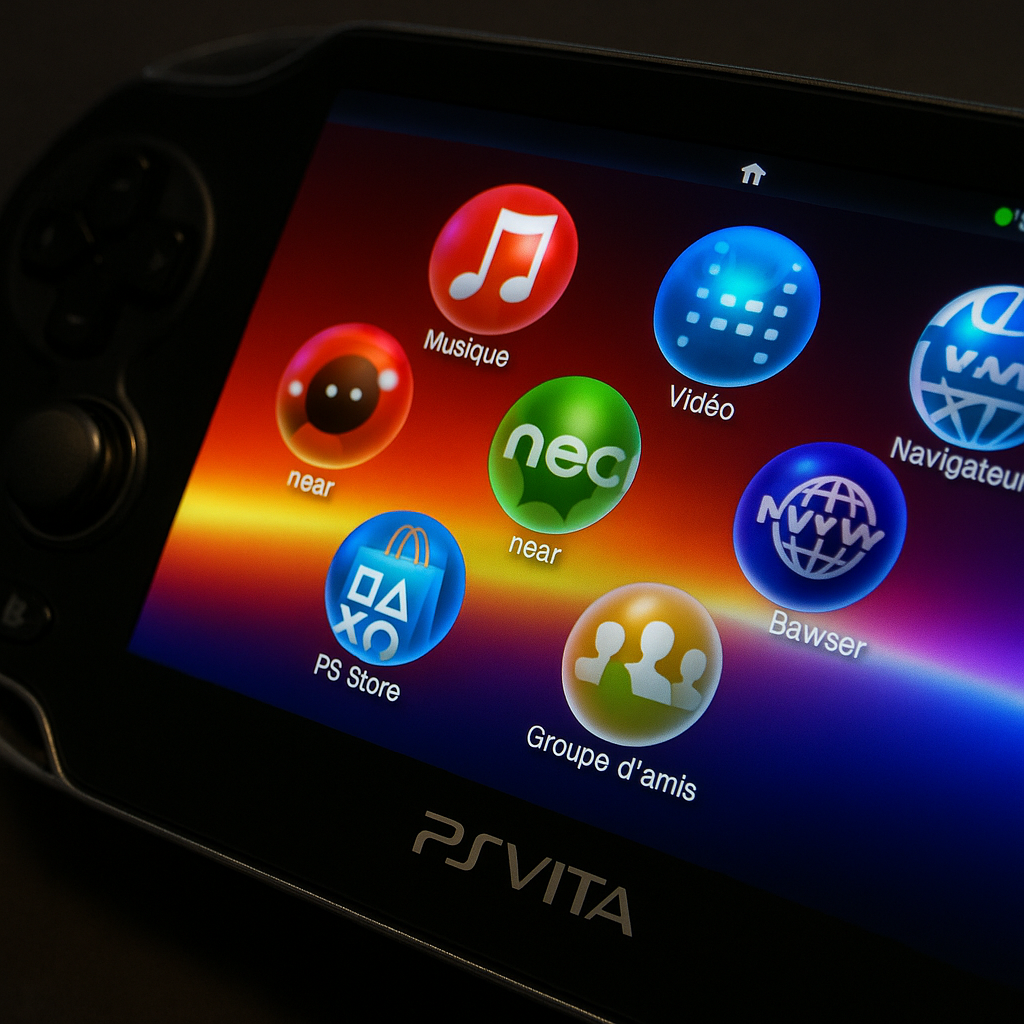
Introduced with the PS4, Remote Play allowed streaming a console game to the Vita via Wi-Fi or 3G/4G connection. More than a gadget, this feature offered unprecedented freedom of play: start Bloodborne in the living room then finish a boss in the kitchen.
Streaming quality and latency
On a high-performance local network, the image approaches that of a 720p TV screen, with a delay of about 60 ms, sufficient for most genres. Outdoors, quality will strongly depend on bandwidth and ping, making some fighting games tricky.
Uses and limits
Beyond comfort, Remote Play enabled unexpected uses: for example, broadcasting sessions on a PC for live streaming. However, the absence of an HDMI port on the Vita limited professional connectivity. Nevertheless, this connection later inspired similar mobile applications for console streaming.
The homebrew scene: creativity and tinkering
Since 2012, independent developers have begun exploiting vulnerabilities in the Vita’s firmware. The power of the ARM Cortex-A9 processor and the presence of two analog sticks made it an ideal playground for emulators and utilities.
Key tools and emulators
- VHBL (Vita Half-Byte Loader): the flagship of homebrew loaders.
- VitaShell: file manager and package installer.
- RetroArch: multi-system emulation (NES, SNES, PS1…), turning the console into a mini retro platform.
Risks and legality
Installing unsigned code involves modifying the firmware, which voids the warranty. Sony has released several updates to patch vulnerabilities, making each OS version more secure. Yet, the community persists: beyond the simple motivation to play, it is a technical challenge and a quest for software autonomy.
Comparison with competing devices
The Nintendo 3DS focused on glasses-free 3D and a strong proprietary catalog, while the booming smartphones already offered a range of mobile games. In this context, the Vita played the premium card: high-end components, dual-sided touch interface, and advanced network features.
“The Vita remains today an example of a console where attention to detail is felt, although sold in the shadow of smartphones and the 3DS.”
Historically, this ambition recalls the case of the Bally Astrocade, a device that offered unexpected graphical performance in its time but struggled to find its audience. And, to understand the path traveled from the first PlayStation in 1994 to the Vita, one can consult the console timeline.
Technical specifications
| Element | Details |
|---|---|
| Processor | ARM Cortex-A9 MPCore dual-core at 333 MHz |
| RAM | 512 MB |
| Internal storage | 0 MB (proprietary Memory Card: 4 GB to 64 GB) |
| Screen | 5′ OLED 960 × 544 pixels |
| Connectivity | Wi-Fi b/g/n, 3G/4G (optional), Bluetooth 2.1 |
| Battery | 2210 mAh (up to 5 hours of gameplay) |
| Ports | USB 2.0, 3.5 mm headphone jack, PS Vita cards |
FAQ
- What is the difference between the OLED and LCD versions? The first uses an organic panel for absolute blacks, the second a classic backlight with slightly lower power consumption.
- What are the requirements to enjoy Remote Play? An updated PS4, a stable Wi-Fi network or a 4G connection, and the Remote Play app installed on the Vita.
- Can Linux be installed on the Vita? Ports have appeared via HENkaku, but usage remains limited due to proprietary drivers.
- Is the homebrew scene still active? Yes, although reduced, it maintains emulators and small useful projects for game archiving.
