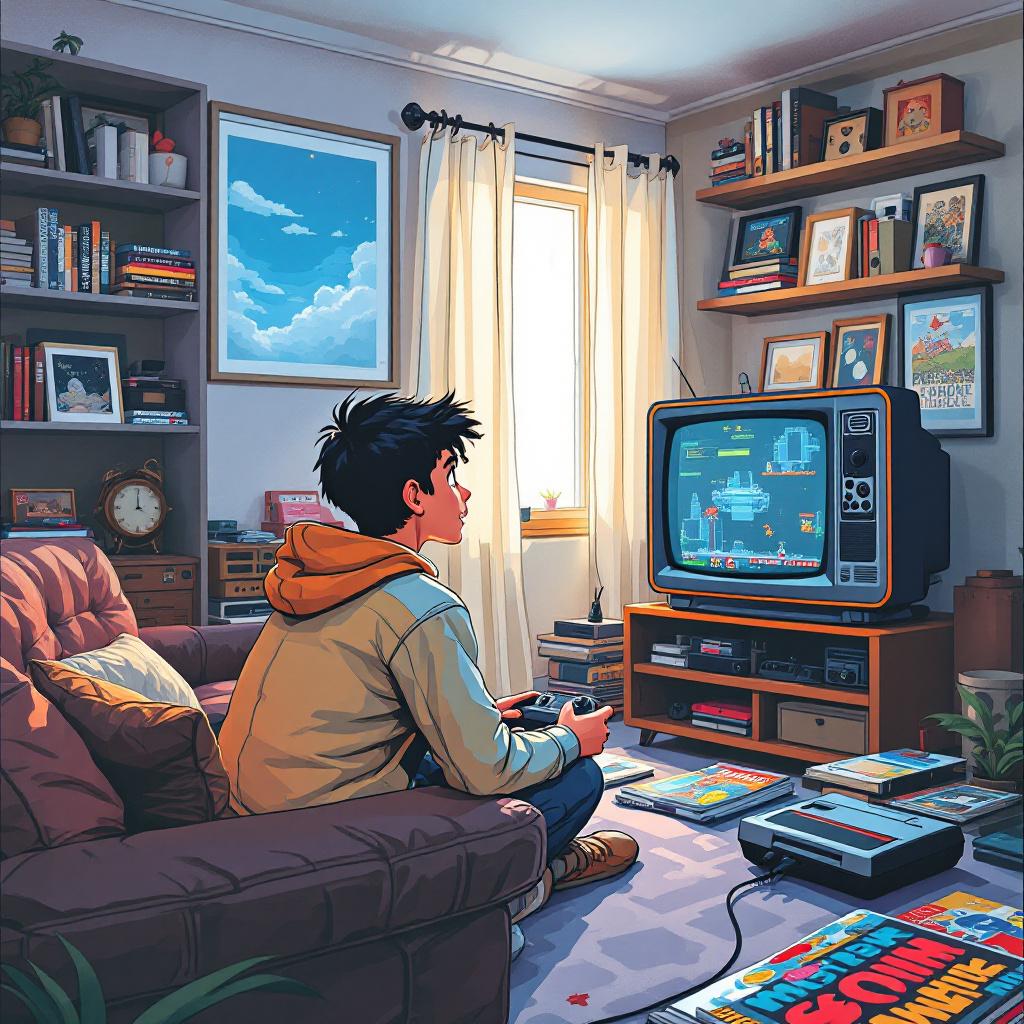
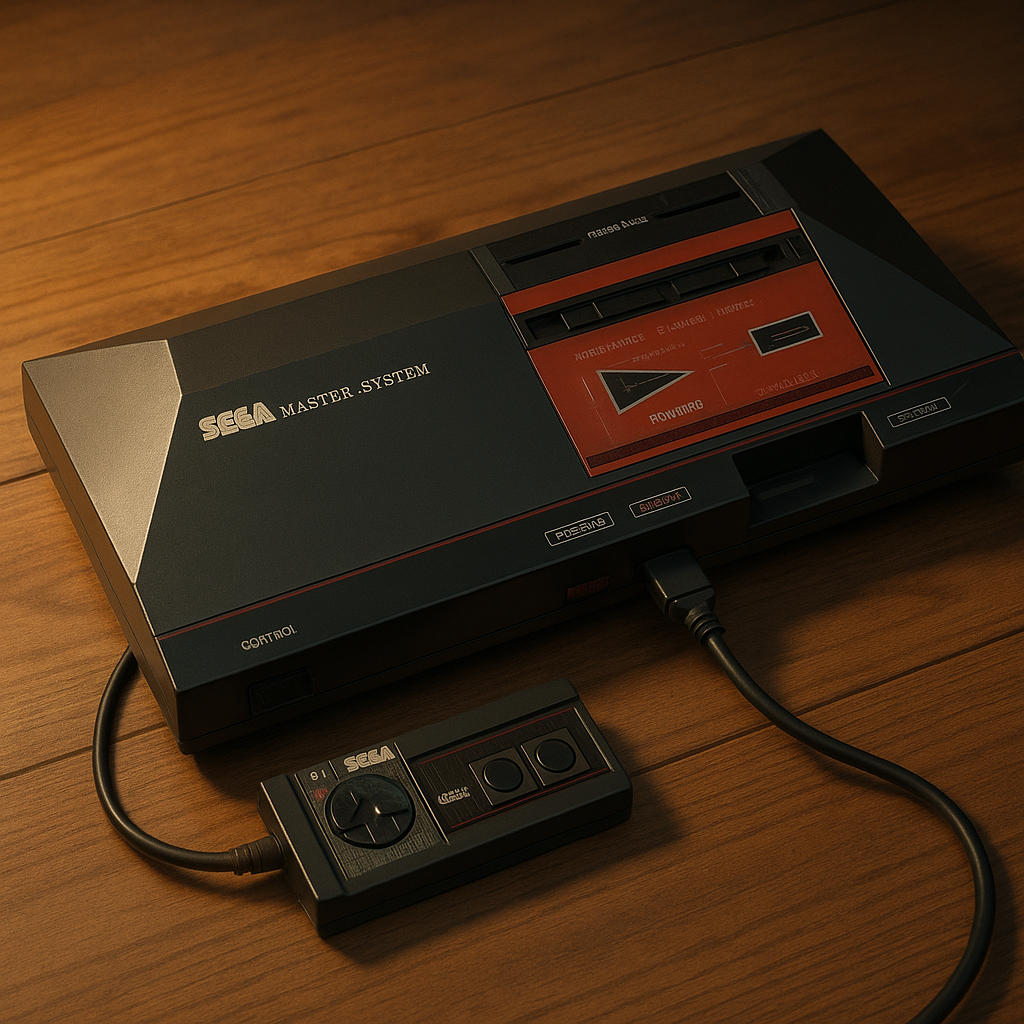
At a time when Nintendo ruled the console market undisputedly, Sega played the troublemaker with its Master System. Its sleek silhouette, streamlined controller, and Z80 processor under the hood made it a promising outsider. Yet, far from Japan, in Europe, this 8-bit console managed to unite a community of enthusiasts, challenge the giants, and leave a lasting mark in video game history.
🎮 Launch in 1986: arrival in France, the United Kingdom, and Germany, with an aggressive pricing policy to counter the dominance of the Japanese giant.
💾 Solid technical specifications: Zilog Z80 CPU clocked at 3.58 MHz, 8 KB of RAM, and a graphics architecture capable of displaying 32 colors simultaneously.
🕹️ Inventive game library: from Alex Kidd to Shinobi, including exclusive gems with European tones, the Master System cleverly rivaled the Nintendo Entertainment System.
🌍 Continental breakthrough: local strategies, partnerships with European distributors, and impactful advertising campaigns allowed Sega to nibble away market shares, especially in the United Kingdom.
Sommaire
Context of the arrival on the European market
When the Master System landed in 1986, the European video game landscape was already fragmented between consoles, microcomputers, and arcade machines. Nintendo had swept the board thanks to the NES, released in 1983 in Japan and then renamed for export. Facing this quiet force, Sega opted for punchier communication, playing on its “rock’n’roll” brand image and a range of games with more mature tones.
Direct and indirect competitors
Besides the NES, other machines sought their audience: the Atari 7800, revamped for the American market, struggled to attract players due to its sparse catalog. On the local machine side, the Amstrad GX4000, based on the CPC architecture, quickly sank due to lack of flagship titles. In the shadows, microcomputers (ZX Spectrum, Amiga, Atari ST) already captivated a segment of players keen on home development and floppy disks. The Master System thus played on two fronts: offering an attractive price while providing stable cartridges, without the constraints of a floppy disk drive.
Architecture and Technical Specifications
| Characteristic | Detail |
|---|---|
| Processor | Zilog Z80 at 3.58 MHz |
| RAM | 8 KB |
| Video memory | 16 KB |
| Graphics | Resolution 256×192, 32 simultaneous colors |
| Sound | Programmable sound generator (PSG) 3 voices |
| Media | Cartridges |
| Ports | Controllers, expansion (FM, 3D Glasses) |
Graphic and sound capabilities
The Master System featured a graphics chipset capable of displaying backgrounds in multiple scrolling layers and up to 64 sprites on screen, a major asset for action games. On the audio side, the Yamaha-signed PSG offered three voices plus a white noise channel, sometimes complemented by an FM chip on certain models. The result: punchy music and clear sound effects – a notch above what the NES offered at its launch.
The Game Library: Treasures and Flaws
The Master System never reached the NES’s size in terms of cartridges, but it stood out with several notable exclusives. Alex Kidd, the house mascot before Sonic’s arrival, embodies its ambition: an adventure rich in varied mechanics. Phantasy Star offered an innovative space RPG, while Shinobi brought the ninja atmosphere with a tough difficulty.
This diversity sometimes came at the cost of editorial line coherence: some third-party titles, known to be average, diluted the “premium” image Sega wanted. At the same time, the European ecosystem received localized or adapted versions, expressly designed to appeal to a less English-speaking audience – a care no competitor systematically took.
Business Strategies and European Breakthrough
Sega played the local partnership card, collaborating with distributors such as Mastertronic in the UK, or Spidersoft in Germany. Television advertisements less sanitized than Nintendo’s, filled with catchy slogans, forged a more rock’n’roll identity. The “console+cartridge” packs at bargain prices, and sometimes a free FM accessory, brought a breath of fresh air. Even though the Master System never dethroned the NES, it carved out a respectable market share, hovering around 10% in Western Europe.
Legacy and Place in Players’ Memory
In the collective imagination, the Master System remains the anti-hero: not the most powerful, nor the most stocked, but bold enough to offer something different. Today, its cartridges are sought after by collectors, and homebrew projects continue to emerge, proof of the unbreakable bond it forged with a loyal community. Far from being a mere preamble to the Mega Drive, this 8-bit console forged its myth by playing the European originality card.
FAQ
What year marks the European launch of the Sega Master System?
The console was marketed in Europe in 1986, first in the United Kingdom and then in several Western European countries.
Why didn’t the Master System surpass the NES?
Despite good technical capabilities, its limited catalog and the strength of the Nintendo brand restricted its growth.
Which must-have titles should be mentioned?
Among the essentials: Alex Kidd in Miracle World, Phantasy Star, Wonder Boy, and Shinobi.
How is the Master System positioned in a retro collection?
It is often seen as a prized piece for enthusiasts seeking an 8-bit experience different from the NES.
