
| Key Points | Details to Remember |
|---|---|
| 🔧 Visionary Engineers | Individuals like Gunpei Yokoi and Ralph Baer transformed technical concepts into consumer products |
| 🎮 Hardware Revolution | The Game Boy or the PS1 defined entire generations of players |
| 🏢 Legendary Studios | Atari and Blizzard created universes that still mark the industry |
| 💡 Creatives vs Engineers | The synergy between design and technology remains crucial for success |
| 🌍 Lasting Legacy | The methods of these pioneers still influence modern development |
Behind every revolutionary console and legendary franchise are determined engineers and bold studios. These architects of digital imagination transformed electronic entertainment from a niche hobby into a global cultural phenomenon. Their journey reveals how seemingly obscure technical choices – like the 8-bit processor of the Game Boy or the 3D engine of Doom – shaped our gaming experiences. Without these visionaries, Mario might have remained a carpenter, and Lara Croft confined to rudimentary polygons.
Sommaire
Key Engineers: The Builders of Virtual Worlds
The history of video games rests on the shoulders of engineers whose technical daring pushed the limits of what was possible. Their inventions did not just exploit existing technology; they invented new languages for fun.
Gunpei Yokoi (Game Boy)
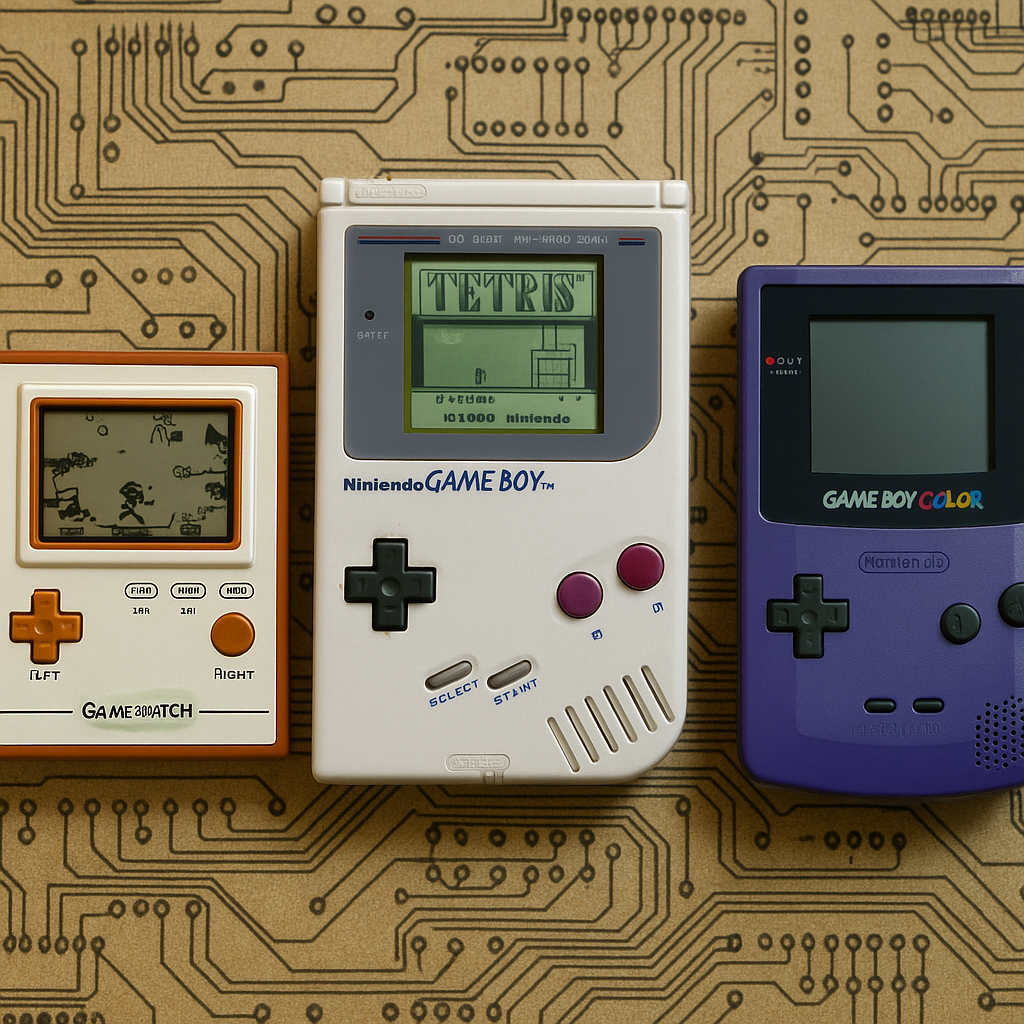
Employed at Nintendo as a simple maintenance technician, this discreet Japanese engineer revolutionized the industry twice. First with the Game & Watch in 1980, the first portable system with a dedicated LCD screen. Then with the Game Boy in 1989, designed according to his philosophy of “lateral thinking with withered technology”: using proven and affordable components to create robust and accessible products. His genius lay in this paradox: by choosing a backlit monochrome screen rather than high-tech color, he offered 30 hours of battery life versus 3 hours for the competition. A minimalist approach that made Tetris a worldwide phenomenon.
Ralph Baer (Magnavox Odyssey)
Nicknamed the “father of video games,” this German-born American engineer developed the Brown Box prototype of the first home console in his garage in 1968. Marketed as the Magnavox Odyssey in 1972, it preceded Pong by six months. His key invention? A system generating movable dots on the screen, controllable by the user via paddles. Baer understood before anyone else that television could become interactive – an intuition that would create a $200 billion industry.
John Carmack (id Software)
This self-taught programmer rewrote the rules of 3D gaming. In 1992, his engine for Wolfenstein 3D introduced ray-casting, allowing smooth movement in pseudo-3D environments. Then came Doom in 1993, with its innovative rendering system that divided the screen into visible and invisible sectors. His specialty? Making these technical feats accessible on consumer PCs. Carmack paved the way for modern FPS games while promoting the shareware model and the modding community.
Ken Kutaragi (PlayStation)
Nicknamed “the man who made Miyamoto cry,” this Sony engineer dared to challenge Nintendo with a console focused on polygonal 3D. His technical bet? Using parallel processing units to manipulate thousands of polygons in real time. The PS1 (1994) popularized the CD-ROM and its 650 MB of storage compared to 64 MB cartridges, allowing unprecedented cinematics and soundtracks. Kutaragi proved that an electronics company could dominate video games without a gaming heritage.
Iconic Studios: Crucibles of Creation
Some studios became legends not by their size, but by their ability to merge technical innovation and artistic vision. Their distinct corporate cultures gave birth to entire genres.

- Atari (1972): Founded by Nolan Bushnell, it was the first studio to industrialize video games. Its star engineering team, including Al Alcorn, created Pong and the Atari 2600, establishing the economic model of interchangeable cartridges.
- Rareware (1985): This English studio started with ZX Spectrum games before revolutionizing 3D on the Nintendo 64. Their technical feats in GoldenEye 007 (1997) defined the console FPS with a perfectly optimized split-screen system.
- SquareSoft (1986): Their bold bet on Final Fantasy VII (1997) involved 120 developers over three years. Their pioneering use of pre-rendered cinematics merged cinema and interactivity, popularizing the JRPG in the West.
- Blizzard (1991): Masters of technical polish, they launched Warcraft (1994) with revolutionary pathfinding and Diablo (1996) with its procedural dungeon generator. Their mantra “easy to learn, hard to master” became a design bible.
- Ubisoft (1986): The Guillemot brothers built an empire from Brittany by betting on proprietary engines like UbiArt Framework. Their systemic approach in Assassin’s Creed (2007) created living cities thanks to innovative crowd AI.
Creatives versus Engineers: An Indissociable Duo
The history of video games is marked by a fruitful tension between two poles: engineers pushing technological limits and creatives exploring new narrative forms. Shigeru Miyamoto (creator of Mario) and Gunpei Yokoi at Nintendo embody this perfect duo: Yokoi provided the technical tools, Miyamoto populated them with unforgettable characters. Similarly at id Software, where Carmack’s revolutionary engines served the nightmarish visions of designer John Romero. This dialectic explains why some promising technical platforms fail without strong artistic direction, while innovative concepts abort without viable technical solutions. Success is born when code and imagination dialogue – as in the original PlayStation team where Kutaragi’s hardware constraints stimulated third-party developers’ creativity.
“Great games are born when technology becomes invisible, letting pure emotion emerge.” – Former developer at SquareSoft
Legacy 2025: Their DNA in Modern Gaming
The influence of these pioneers goes far beyond retro nostalgia. Yokoi’s design principles now inspire the “cheap gaming” movement on mobile, where ease of access takes precedence over raw power. The open-source model of id Software’s engines foreshadows blockchain technologies in decentralized games. Blizzard’s “player first” philosophy is reflected in modern matchmaking systems. As for the PS1, it established the DNA of hybrid consoles like the Switch, combining innovation and accessibility. Even Ubisoft studios’ modular approach – with their dispersed teams collaborating on the same engine – anticipated today’s cloud-based development. These direct heirs prove that in video games, future revolutions often arise by reinterpreting the pioneers’ insights.
Frequently Asked Questions About Video Game Pioneers
What major innovation is attributed to Gunpei Yokoi?
Yokoi revolutionized portable gaming with the Game Boy in 1989, applying his philosophy of “lateral thinking with withered technology”: using proven and affordable components to create robust and accessible products rather than aiming for high technology.
How did John Carmack influence 3D game development?
Carmack developed rendering techniques such as ray-casting (Wolfenstein 3D) and Binary Space Partitioning (Doom) enabling smooth 3D environments on consumer hardware. He also popularized the shareware model and encouraged community modding.
Which historic studios created major game genres?
Atari popularized arcade games, Blizzard defined the modern MMORPG with World of Warcraft, SquareSoft established the codes of the JRPG, and id Software invented the contemporary FPS with its Wolfenstein/Doom/Quake series.
These builders of virtual worlds remind us of an essential truth: in video games as elsewhere, it is the minds capable of linking unbridled creativity and technical rigor that chart the paths of tomorrow. Their legacy lies not only in the consoles they designed or the franchises they launched, but in this stubborn conviction that technology must serve human imagination – not the other way around.
