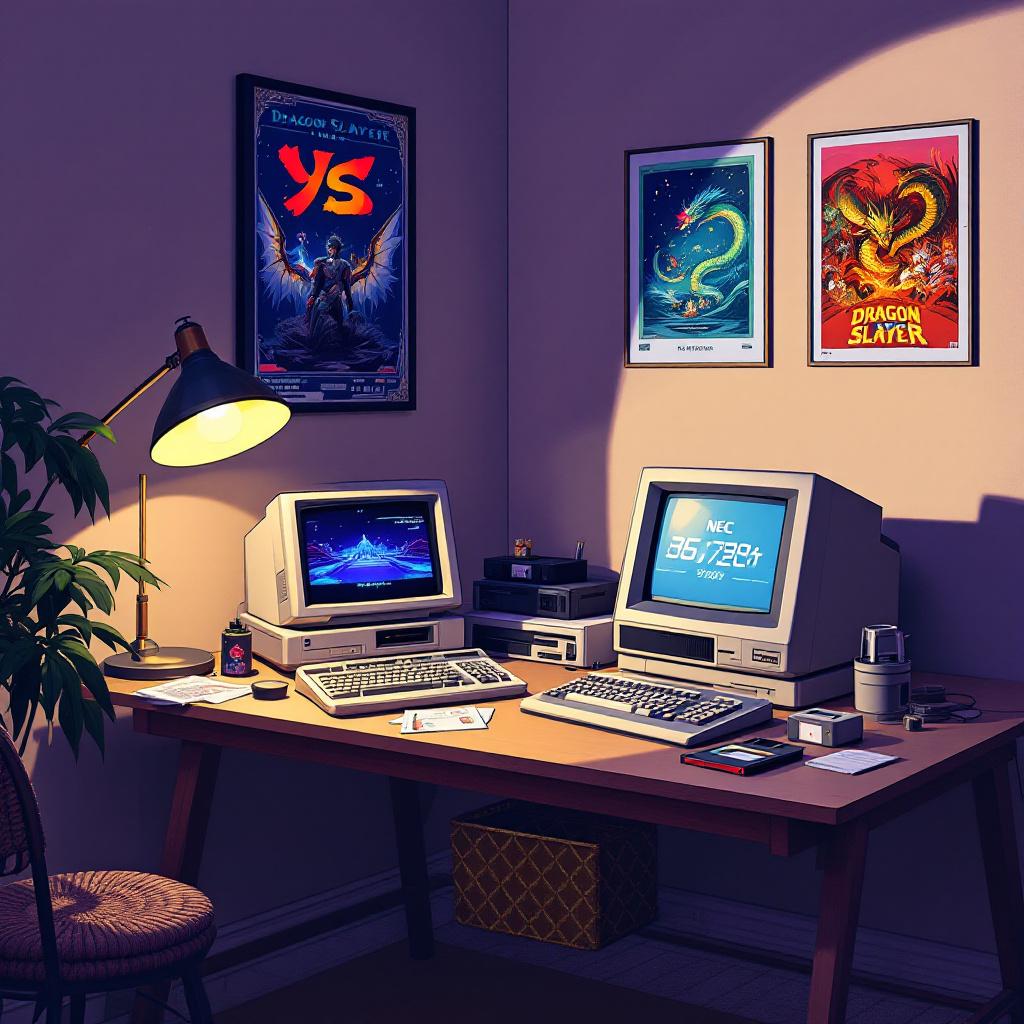
In the early 1980s, a workshop shone in the shadows: NEC launched two microcomputers that would become the foundation of a unique ecosystem in the world. The PC-8801, released in 1981, and its big 16-bit brother, the PC-9801, created a playground for experimentation where the first Japanese action-RPGs emerged. It is in this cradle that Falcom brought to life Dragon Slayer, then Ys, two franchises whose impact on video games would continue to grow.
🔥 1981-1982: birth of the PC-8801, equipped with a 4 MHz Z80 CPU and a palette of 8 colors, all housed in a compact case that appealed to Japanese enthusiasts.
💾 The PC-9801, launched in 1982, switched to the Intel 8086, offered 16 colors and more memory: it attracted developers seeking graphical power.
🎮 On the software side, Dragon Slayer urges the player to explore randomly generated dungeons, while Ys relies on a revolutionary soundtrack and linear storytelling.
🚀 This ecosystem sowed the seeds of modern PC gaming: for a complete timeline, see the evolution of these machines.
Sommaire
The origins of NEC PC-8801 and PC-9801
An industrial context in full mutation
At the turn of the 1980s, the Japanese computer industry sought to compete with American platforms such as the Apple II or the TRS-80. NEC responded with a dual approach: an affordable model for the general public (PC-8801), and a more ambitious 16-bit (PC-9801). These machines were not simply clones: they were based on architectures designed to exploit various expansion cards, from 5.25-inch floppy drives to FM synthesis modules.
Key architecture and performance
- PC-8801: Zilog Z80A CPU at 4 MHz, 64 KB RAM, graphics resolution 640×200, sound programmed via a single PWM channel.
- PC-9801: Intel 8086 at 5 MHz, from 128 KB to 512 KB RAM (expandable), graphics 640×400 or 640×200, Yamaha YM2203 FM sound chip.
- Early plug-and-play: compatible expansion slots, optional external drive or hard disk controller.
This modularity attracted developers, who could assemble their ideal configuration to produce more ambitious titles.
A playground for the pioneers of JRPGs
Dragon Slayer: the genesis of the action-RPG
Released in 1984, Dragon Slayer marked a turning point: players wander through a labyrinth where the interface combines real-time movement and inventory management. Visually, the PC-8801 makes the most of its eight colors to differentiate monsters and objects. Each game becomes unique thanks to procedural generation, a technical feat for the time.
“Without the PC-8801, Dragon Slayer probably would not have come to life in such a dynamic form.”
Ys: when sound power shifts storytelling
In 1987, Ys exploited the PC-9801’s FM chip and imposed unprecedented musical quality: orchestral, rhythmic, and lively tracks define the experience. The gameplay favors automatic blocking instead of an attack button, creating a sense of fluidity. The dungeon structure breaks free from random generation to offer a scripted progression with integrated puzzles.
Technical Comparison: PC-8801 vs PC-9801
| Feature | PC-8801 | PC-9801 |
|---|---|---|
| Processor | Z80A @ 4 MHz | Intel 8086 @ 5 MHz |
| RAM | 64 KB (expandable to 128 KB) | 128–512 KB (up to 1 MB) |
| Graphics Resolution | 640×200 (8 colors) | 640×400 / 640×200 (16 colors) |
| Sound | Mono PWM | Yamaha YM2203 FM (3 channels + SSG) |
The Influence of the Japanese Ecosystem
A Community of Enthusiasts
Beyond simple consumption, many user clubs formed in major cities. BASIC listings were exchanged to create one’s own games, fanzines were created where FM sound routines or dungeon generation algorithms were dissected. These circles became talent pools, some eventually joining Falcom, Enix, or Square.
An Influence on Modern PC Gaming
NEC’s choices inspired the modularity of PC cases in the 1990s: CD-ROM drives, accelerator cards, or dedicated sound cards. The mechanics of Dragon Slayer and Ys, mixing real-time action and scripted progression, are found today in many indie titles. This lineage even continues in the retro scene, where these machines are discovered thanks to emulators and physical compilations.
FAQ
Why did the PC-8801 and PC-9801 leave a mark on video game history?
They offered unprecedented flexibility to developers and introduced innovative gameplay mechanics, while leveraging graphical and sound capabilities superior to competing microcomputers.
What are the major differences between the PC-8801 and PC-9801 versions of Dragon Slayer?
On the PC-9801, FM sound enhances the atmosphere, and the higher resolution allows for more detailed backgrounds, although the 8801 version remains appreciated for its raw and immediate character.
How can one play Ys and Dragon Slayer on these machines today?
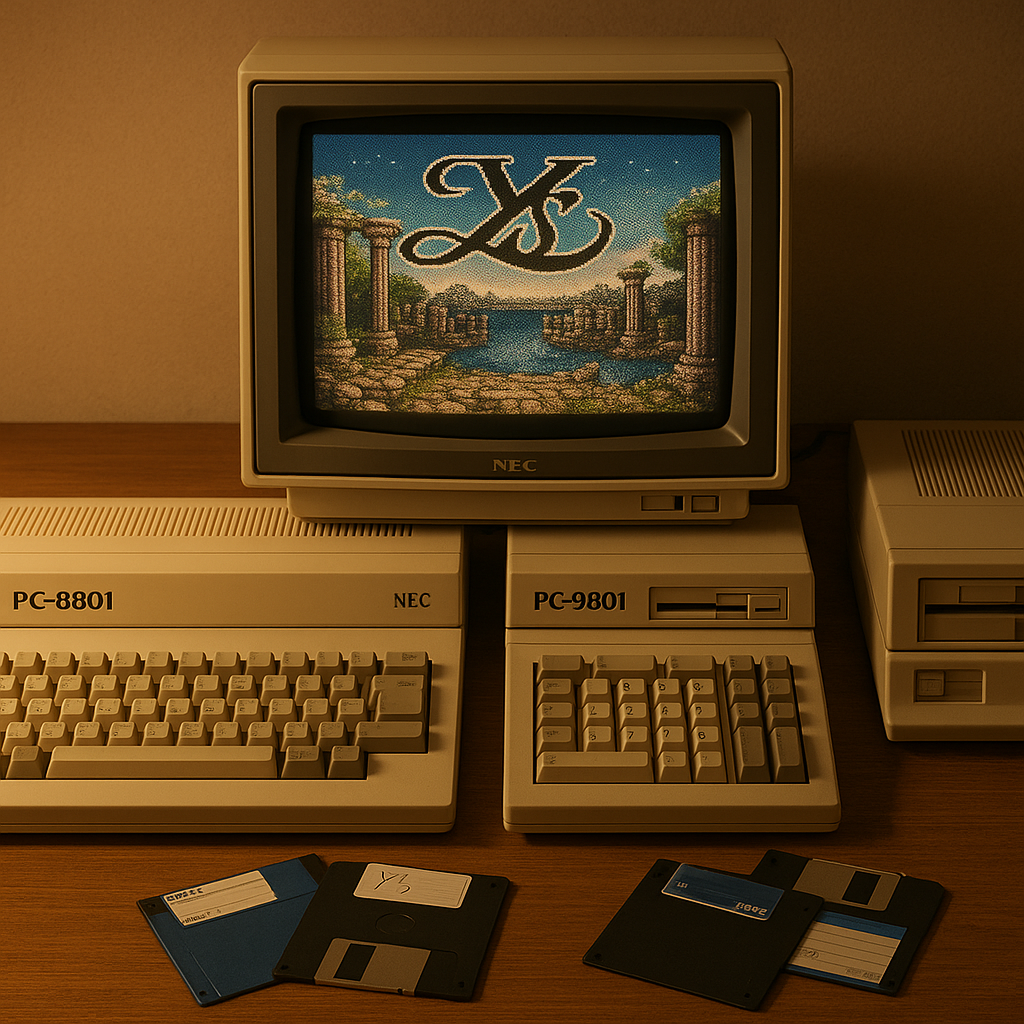
Emulators like Neko Project II (for PC-9801) or M88 (for PC-8801) are free and allow loading ROMs, often available through online archives dedicated to retro gaming.
What was the commercial impact of these computers?
Between 1981 and 1997, NEC sold several hundred thousand units of each model, making them one of the leaders in the Japanese market before the massive arrival of IBM PCs and compatibles.
Are there any spiritual successors to these machines today?
Some independent manufacturers offer clones or DIY kits based on FPGAs, exactly recreating the original architecture for retro purists!
