For over ten years, PCSX2 has established itself as the reference for reliving the legendary PlayStation 2 catalog on PC. Version 2.0 marks a turning point in the open-source project by focusing on deep rewrites, expanded support for modern hardware, and refinements that change the game for enthusiasts. This article dissects the most significant contributions of this major update, from high-definition shaders to advances in software compatibility, including interface redesign and under-the-hood optimizations.
Sommaire
Graphical Innovations
The graphical overhaul of PCSX2 2.0 is based on a redesigned shader system to leverage current GPUs. Rather than simply adding “post-processing” filters, the team integrated customizable pipelines that correct 3D artifacts inherited from the PS2 at the source.
High-Definition Shaders and Artifact Correction
Previously, many titles suffered from pixelated textures or shadow breaks. Now, the new shading engine applies adaptive supersampling algorithms: geometry receives subtle smoothing, while textures retain their original grain. For example, Metal Gear Solid 3 benefits from unprecedented sharpness without glitches on face models.
Custom Resolution Management
With PCSX2 2.0, you can set ultra-wide resolutions (like 3440×1440) or go up to 4K in just a few clicks. A simple menu now offers presets (1080p, 1440p, 4K) and allows the freedom to enter an arbitrary value. Behind this ease lies a dynamic rendering system capable of realigning shadow and light areas in real time, without noticeable slowdown.
Compatibility and Stability
Over updates, PCSX2 has consistently increased the list of perfectly playable games. In this version, there is improved support for titles that previously posed problems, especially those heavily using memory card extensions or relying on original development kits.
Expanded Peripheral Support
In addition to the DualShock controller, PCSX2 2.0 natively supports steering wheels, VR headsets, and force feedback controllers. Windows and Linux drivers have been unified, simplifying configuration regardless of the host system. Developers have integrated a more robust DirectInput/XInput compatibility layer, reducing crashes related to the injection of non-compliant commands.
Game-Specific Improvements
Some titles showed freezes during cutscenes or slowdowns in local multiplayer. Thanks to several targeted fixes, games like Dragon Ball Z: Budokai Tenkaichi 3 or SSX Tricky now run smoothly. To put this in a broader context, feel free to consult a status report on emulation in 2025 that puts these technical advances into perspective regarding legal issues and community approaches.
Performance and Optimization
Players with modest setups often feared the heaviness of emulation. PCSX2 2.0 succeeds with honors by optimizing several critical routines on multi-core CPUs and GPUs.
| Version | Tester (Core i7-9700K) | Average FPS (God of War) |
CPU Usage |
|---|---|---|---|
| 1.6.0 | Windows 10 | 75 | 85 % |
| 2.0.0 | Windows 10 | 92 | 68 % |
On average, there is an increase of more than 20% in smoothness on demanding titles, and the processor load decreases by nearly 20%. These gains are due to a reworked thread scheduler, allowing certain emulation tasks to be offloaded to the GPU without overloading the CPU.
Interface and User Experience
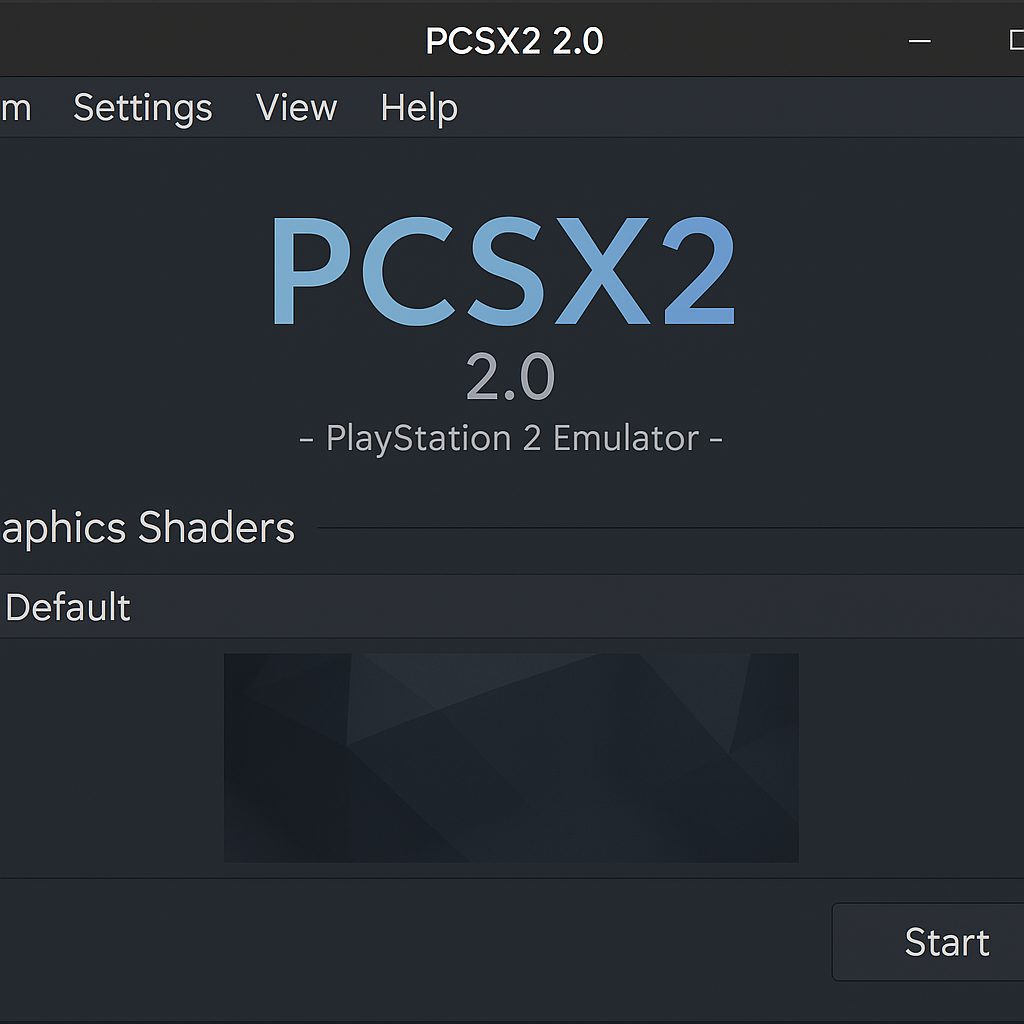
At the first launch of version 2.0, the eye immediately notices the new dashboard. Clearer, more modular, it combines a visual overview of settings, an update center, and integrated documentation.
Simplified Setup Assistant
Rather than navigating countless technical menus, the assistant guides the user step by step: hardware detection, basic settings (graphics, audio, controllers), and personalized advice. The embedded AI analyzes the compatibility of each game and recommends optimal settings to avoid known crashes or artifacts.
Integrated Shader and Plugin Catalog
The plugin manager now offers official packs validated by the team. No need to scour forums to find the right version of a shader: everything is a click away, categorized by type (smoothing, depth of field, color correction) and previewed in real time.
Resources, Tutorials, and Community
The open-source spirit of PCSX2 2.0 is reflected in the enriched documentation and the exchange platform. An updated Wiki hosts illustrated guides and technical tips, while developers regularly publish detailed changelogs to explain each fix.
“Transparency is at the heart of our approach: understanding how a feature works means being more comfortable configuring it.”
Official Forums and Channels
Official Discord channels and a forum structured around alpha and beta versions allow real-time problem reporting. The best contributors are highlighted, encouraging quick feedback and constant alignment between users and developers.
Future Prospects
While PCSX2 2.0 represents a major milestone, the roadmap already mentions advanced support for software ray tracing and integration of Steam Deck profiles. Ultimately, the emulator could provide cloud-synchronized “save states” and an online multiplayer mode for cooperative titles.
This trajectory echoes the general trend in contemporary emulation: moving towards a turnkey solution where technical complexity disappears behind an accessible interface and uncompromising performance.
In Conclusion
PCSX2 2.0 proves that PS2 emulation is not stuck in the past. Graphic advances, enhanced stability, performance gains, and UX redesign redefine the experience, whether you are a veteran or a new enthusiast. The future looks promising with the upcoming arrival of cloud options and more advanced drivers. For those wishing to rediscover or explore anew the golden age of the PS2, this update is a must-have.
