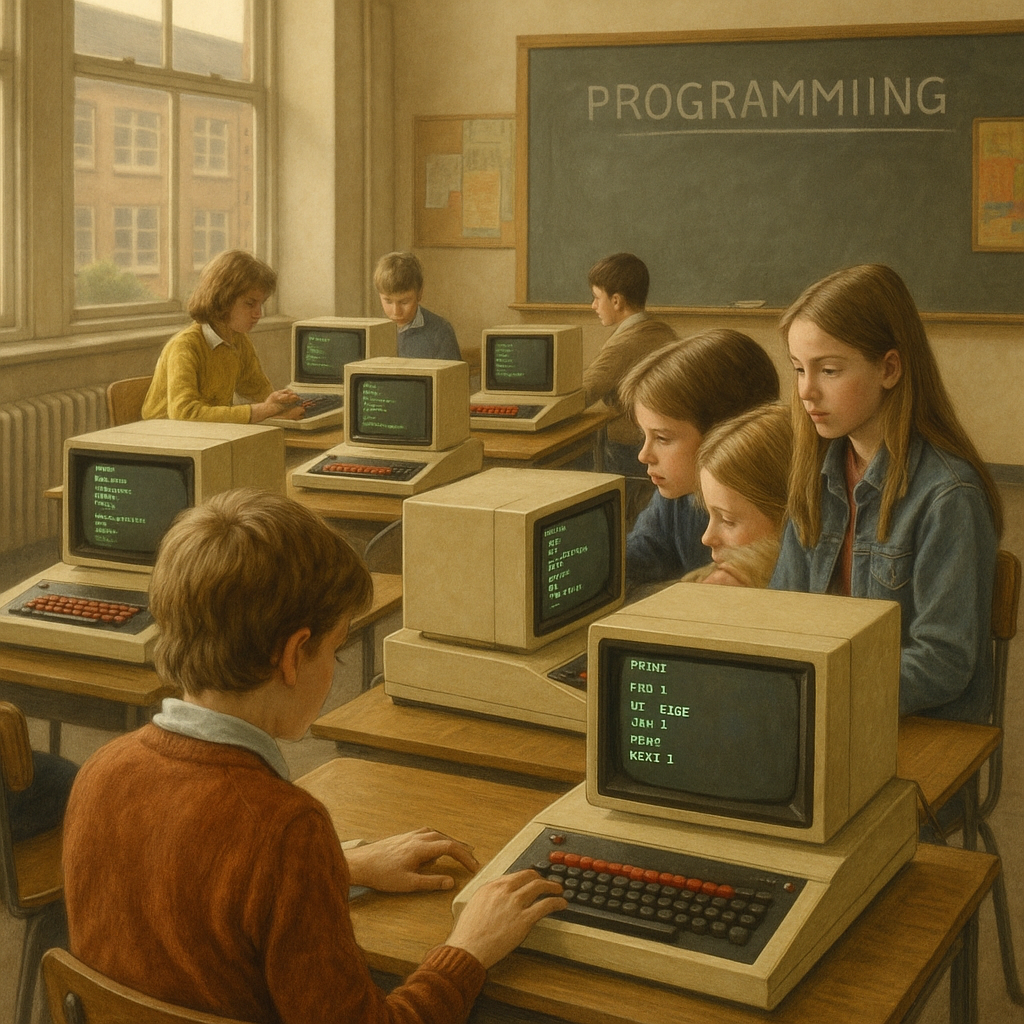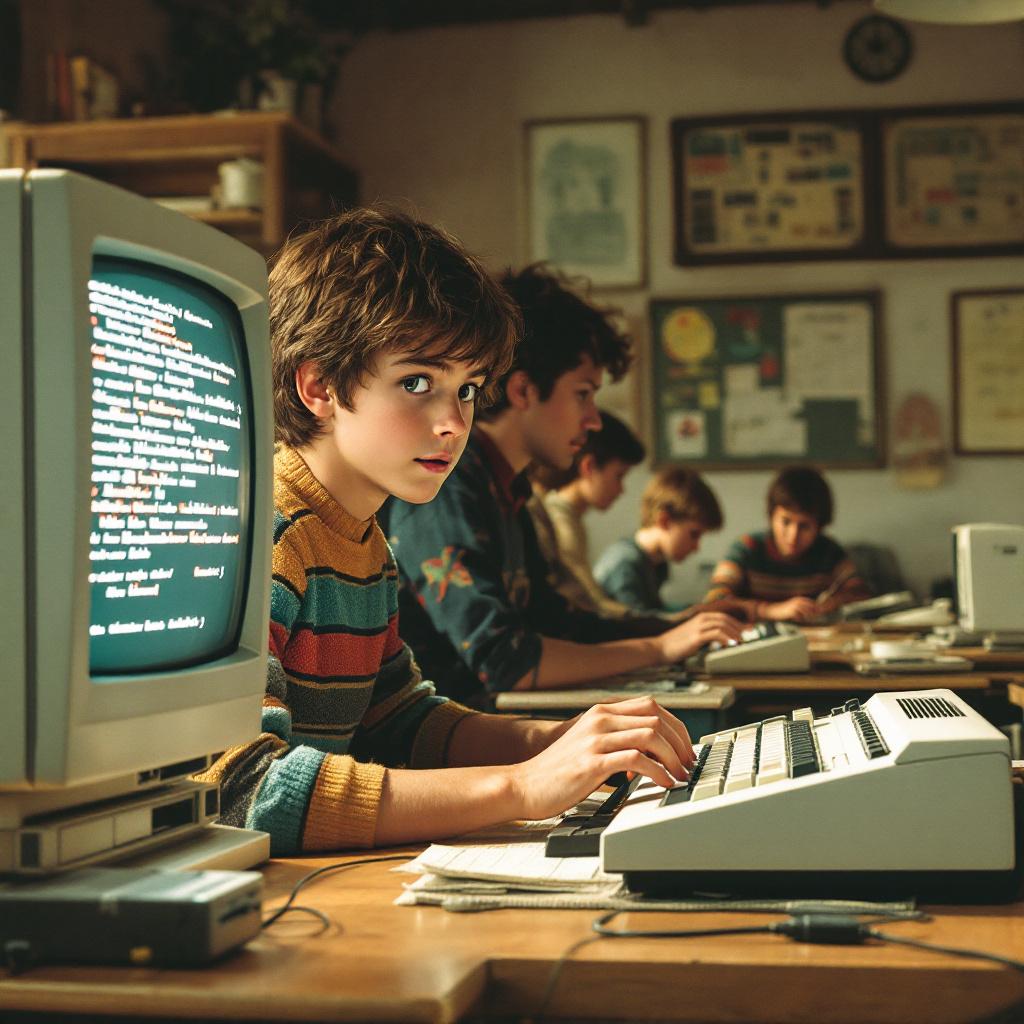
In the early 1980s, the BBC embarked on a bold project: to familiarize an entire generation of Britons with computing. At that time, microcomputers were still reserved for enthusiasts or university laboratories. With the BBC Micro, then the Acorn Electron, the public broadcaster provided robust machines and a programming language suited to classrooms. The experience did not stop at a simple technology course: it shaped the digital culture of the United Kingdom and generated a wave of developers behind many industrial successes.
📌 BBC Micro was born from a collaboration between the public broadcaster and Acorn Computers, to introduce a reliable microcomputer into every school.
🚀 Educational BASIC simplified the learning process, encouraged exploration, and allowed students to create their first programs within hours.
🎯 The Acorn Electron, an economical derivative, democratized access to hardware similar to the Micro in homes, reinforcing the ripple effect.
💡 This educational momentum nurtured the British IT sector, from game creation to fintech startups, and still inspires modern initiatives.
Sommaire
The Origins of the BBC Micro Project
Technological and Educational Context
In the 1970s, consumer computing did not yet exist. Universities used minicomputers, while high schools were often limited to typing or formal logic. The BBC, sensitive to the emergence of digital technology and concerned about its educational role, launched a consultation with industry in 1981 to design a machine adapted to pedagogical needs. The goal: to provide students with a versatile, reliable tool built on a clear educational circuit, so that computing would cease to be a mere gadget.
Design and Partnerships
The BBC chose Acorn Computers, an SME already renowned for its development boards. The specifications were precise: high-frequency 6502 CPU, graphics engine capable of displaying vector graphics, interfaces for cassette players, floppy disks, and printers. In parallel, detailed manuals and a training program were developed by teachers and engineers. The approach was intended to be collaborative: the hardware was open, teachers could contribute to extensions and propose creative challenges to their classes.
BBC Basic and Learning by Doing
A Version Adapted for Teaching
The choice of BASIC was no accident. This language, simple to grasp, was perfectly suited. BBC Basic included extensions to facilitate graphics manipulation, sound management, and even the creation of assembler routines. Thanks to this flexibility, a student could start with a simple text display on the screen, then progress to loops, subroutines, and finally rudimentary animations. Each step produced a tangible result, encouraging curiosity rather than mere memorization of theoretical concepts.
Examples of Classroom Activities
Teachers quickly designed playful workshops: drawing fractals in a few lines, simulating projectile trajectories, or creating interactive guessing games. A typical exercise involved coding a “snake” in the style of the very first arcade machines, using conditional logic and screen coordinates. Some schools even organized internal programming contests, stimulating creativity and teamwork.
- Animation of geometric shapes (circles, polygons).
- Simulation of simple physical phenomena.
- Creation of mini text and graphic games.
- Exploration of assembly language for the more ambitious.
Evolution with the Acorn Electron
Birth of the Electron Model
At the end of 1983, Acorn introduced the Electron: a simplified BBC Micro, more affordable and intended for individuals. It inherited the essentials: the same processor, a very similar BASIC, and partial compatibility with the Micro’s peripherals. This device benefited from the popularity of the classroom project distribution, creating a commercial ecosystem where students could continue practicing at home, reinforcing autonomous learning.
Key Differences Between Micro and Electron
While these two machines shared a technical base, the Electron targeted the general public with compromises in expansion ports and graphic capabilities. The BBC Micro offered more interface slots for the network card, external sound module, or floppy disk, whereas the Electron filtered some of these possibilities to reduce costs. This strategy, however, allowed a larger number of households to acquire a personal computer similar to the one at school.
| Feature | BBC Micro | Acorn Electron |
|---|---|---|
| Processor | MOS Technology 6502 at 2 MHz | 6502 at 2 MHz (optimized) |
| RAM | 32 KB of RAM | 32 KB of RAM |
| Extensions | 4 interface slots | Single cartridge port |
| Graphics | High-resolution graphic mode | Simplified modes |
| Launch price | ~£235 | ~£150 |
Legacy on the British Technological Scene
Impact on the Software Industry
Developers trained on these machines quickly founded video game studios, giving birth to titles that would mark the history of digital entertainment. Others turned to more serious sectors, inventing management solutions, graphical interfaces, or educational applications. This first practical experience showed that an accessible language could open doors to very diverse professions.
Succession and Memories of the BBC Generation
Although the BBC Micro and Electron disappeared with the arrival of IBM-compatible microcomputers, their spirit endures. Recent initiatives like Raspberry Pi draw inspiration from this heritage, offering a low-cost board and a simple Python language to continue the same dynamic. Modern classrooms adopt the “learning by coding” model, proof that the BBC was right as early as 1982.
Connection with the History of Gaming Computers
The history of the BBC Micro fits into the overall evolution of leisure microcomputers. To place this chapter in a broader perspective, one can consult a chronology of gaming computers tracing the evolution of machines from their beginnings to today’s gaming PCs.
FAQ
Why did the BBC invest in a microcomputer ?
The BBC aimed to raise awareness among as many people as possible about the challenges of computing, which was booming at the time, and to prepare students for the jobs of tomorrow.
What impact did BBC Basic have on programmer training ?
BBC Basic made programming accessible by offering graphic and sound extensions, facilitating learning through practice and stimulating projects.
How does the Acorn Electron differ from the BBC Micro ?
The Electron is an economical version of the Micro, with fewer expansion slots and simplified graphic modes to reduce manufacturing costs.
What is the legacy of these machines today ?
Beyond video games, they generated a programming culture that continues through modern educational platforms like Raspberry Pi or Arduino.