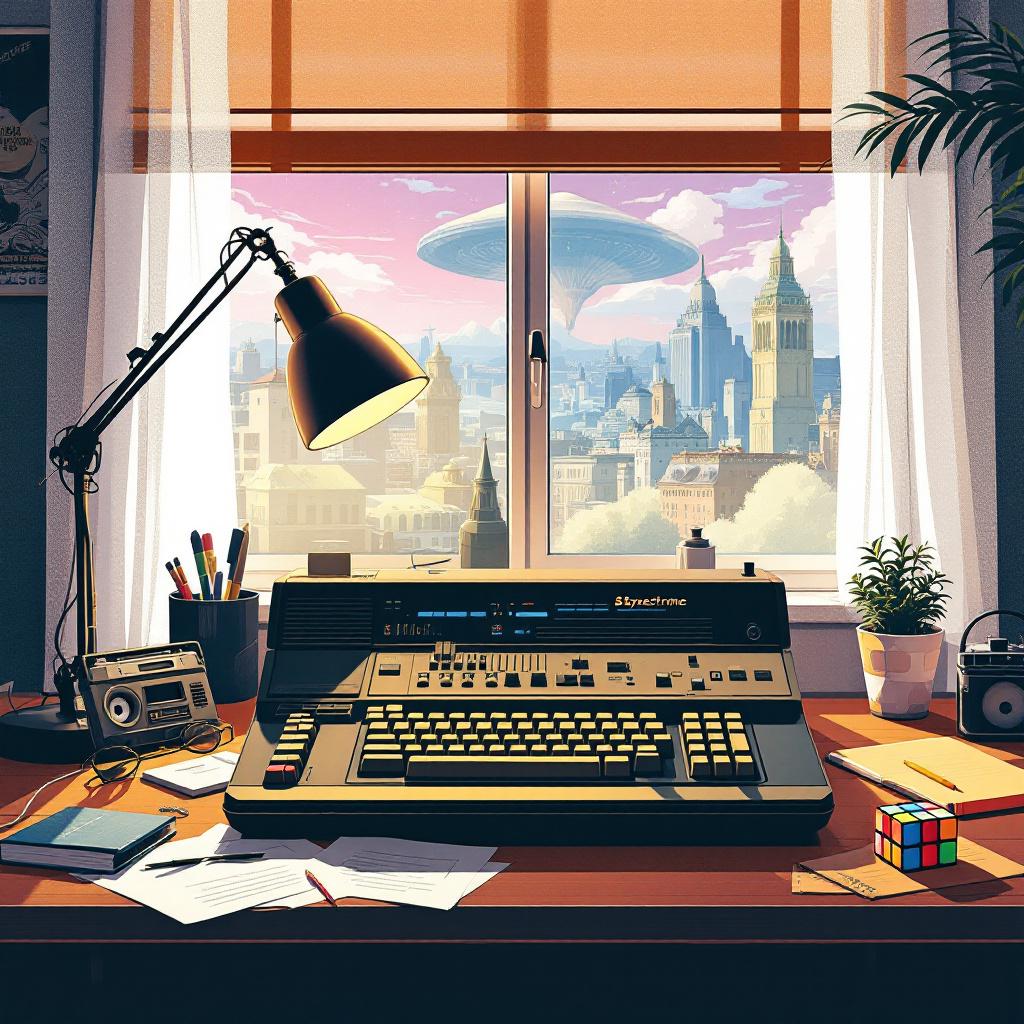
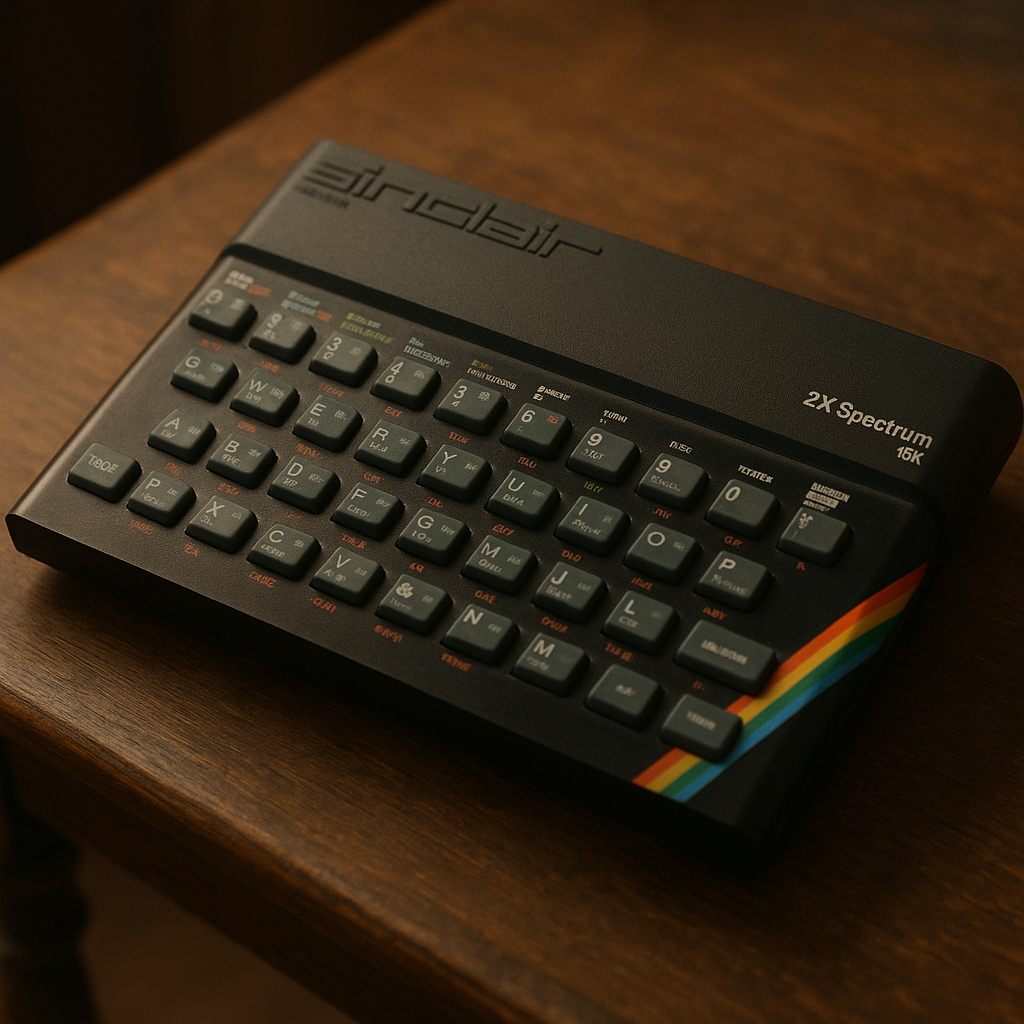
In 1982, the British computing landscape shifted under the sign of a small black box with rubber keys. With only a few dozen pounds sterling, the Sinclair ZX Spectrum made 8-bit accessible to everyone, sparked a true creative boom, and pushed the boundaries of home video gaming. This article dives into the genesis of a phenomenon, explores its bold technical choices, and measures its lasting mark in memories and the industry.
Sommaire
In brief
🙂 Thanks to an unbeatable price and a Z80 chip clocked at 3.5 MHz, the ZX Spectrum quickly became the symbol of consumer computing.
🚀 Its palette of 15 colors and rubber keyboards offer a unique visual and tactile experience, the source of many legendary titles.
🔍 The ecosystem thrived on specialized magazines, cheap cassettes, and a thriving DIY scene, foreshadowing the indie culture that would follow.
Genesis of an icon
Clive Sinclair, a visionary engineer, dreamed as early as 1979 of a microcomputer as accessible as a console. After the commercial failure of the ZX80 and the unexpected popularity of the ZX81, he collaborated with Sir Clive Sinclair and his partner, Amstrad, to design a more powerful and especially affordable model. The goal: to democratize home computing by lowering the price below £100. While budget constraints implied compromises (thin plastic casing, rubber keyboard), these quickly became aesthetic and ergonomic signatures.
Architecture and innovations at a low cost
From a technical point of view, the Spectrum is based on a Zilog Z80A processor at 3.5 MHz, 16 KB of ROM for Sinclair BASIC, and 16 or 48 KB of RAM depending on the version. Its ability to display 256 × 192 pixels, coupled with a palette of 15 colors — two intensity levels for some shades — created an unprecedented visual playground for the time. The sound, a simple mono buzzer, required creativity to reproduce music and effects.
Comparison table of main features
| Model | CPU | RAM | Graphics | Storage |
|---|---|---|---|---|
| ZX Spectrum 48K | Z80A 3.5 MHz | 48 KB | 256×192, 15 colors | Cassettes |
| Commodore 64 | 6502 1 MHz | 64 KB | 320×200, 16 colors | Floppy disks |
| Atari XL 800 | 6502C 1.8 MHz | 64 KB | 320×192, 256 colors | Cassettes/Floppy disks |
| Apple II | 6502 1 MHz | 48 KB | 280×192, 6 colors | Floppy disks |
A flourishing and creative game library
The ZX Spectrum was born amid the “home computer” boom: every household could become a developer. Cheap cassettes encouraged the multiplication of independent titles and amateur demos. All genres were tried: platformers, shoot ’em ups, text adventures, even early strategy games. The integrated BASIC learning encouraged initiation, while the curiosity of enthusiasts fueled a true parallel market of fanzines.
Cultural Impact and Legacy
In just a few months, Crash, Your Sinclair, or Sinclair User became bibles for enthusiasts: reviews, programs, tips were shared among readers. The Spectrum had a lasting influence on the British “bedroom coder” scene, some of whose protagonists would go on to found major studios (Imagine, Ultimate Play the Game). The spirit of resourcefulness and passion for reverse engineering, born around this machine, still inspires the independent software economy.
An Innovative Economic Model
By offering an entry price lower than that of classic video games, Sinclair broke market codes. The cassette/domestic video association relied on existing playback equipment, whereas others bet on more costly dedicated players. The impact is also measured in the way programs were distributed and promoted, often via mail order or small local kiosks.
A Bridge to Modern PCs
While the Spectrum inaugurated democratization, it also served as a gateway to more powerful machines. Through its modular approach, it wove a link to the 16 and 32-bit architectures that followed. To place this transition in a broader context, our evolution of gaming computers provides a coherent overview of the key stages.
Comparison with Its Contemporaries
Compared to the Commodore 64 and Atari XL 800, the Spectrum bet on ultra-accessibility rather than raw performance. Where the C64 offers SID sound and hardware sprites, the ZX relies on a strong community and tight prices. As for the Apple II, often associated with education and professional uses, it is more expensive and less focused on family entertainment — read this article on the Apple II and its disk-based games for more on this subject.
FAQ
What is the difference between the Spectrum 16K and 48K?
The 16K version, launched in early 1982, includes 16 KB of RAM, sufficient for simple programs. The 48K model, appearing a few months later, triples the memory, opening the door to more ambitious games and more complex utilities.
How did one load a game on the Spectrum?
The preferred medium was the audio cassette. A tape recorder was connected to the internal cassette player, the command LOAD”” was entered, and one waited for the machine to interpret the coded sounds to reconstruct the program in memory.
Are there still projects around the ZX Spectrum?
Yes! The retro scene is still alive. You can find modern cartridges, FPGAs recreating the machine, memory expansions, and even new software editions signed by independent publishers.
