
In 1982, a compact computer landed in homes and redefined the notion of home entertainment. Named the Commodore 64, it quickly became a must-have for enthusiasts and the curious alike, thanks to a clever mix of technical performance, affordable pricing, and an impressive game library. Let’s look back at one of the most fascinating adventures in the history of gaming microcomputers.
🎮 With over 17 million units sold, the Commodore 64 holds an absolute record in the field of microcomputers dedicated to video games.
🖥️ Its MOS 6510 processor at 1 MHz, coupled with a VIC-II graphics chip and an innovative SID sound chip, offers colorful pixels and sound atmospheres previously inaccessible to the general public.
⚔️ Facing competitors like the Atari 800 or the ZX Spectrum, it stands out with an unbeatable quality-price ratio and native support for floppy disk and cassette media.
🌟 Thousands of titles, communities still active today, and an incredible retro appeal forge its legacy, which continues to inspire retro-gaming enthusiasts.
Sommaire
Origins and genesis of a phenomenon
Commodore International, already behind the PET and VIC-20, aimed to capitalize on the craze for fun and affordable machines. The C64 project was born in a context of fierce competition: Sinclair, Apple, and Atari competed with innovations to attract individuals. But instead of targeting only geeks, Commodore bet on a low-price strategy, keeping an eye on the profitability of each component. The result? A machine whose name symbolizes the turning point of interactive home entertainment.
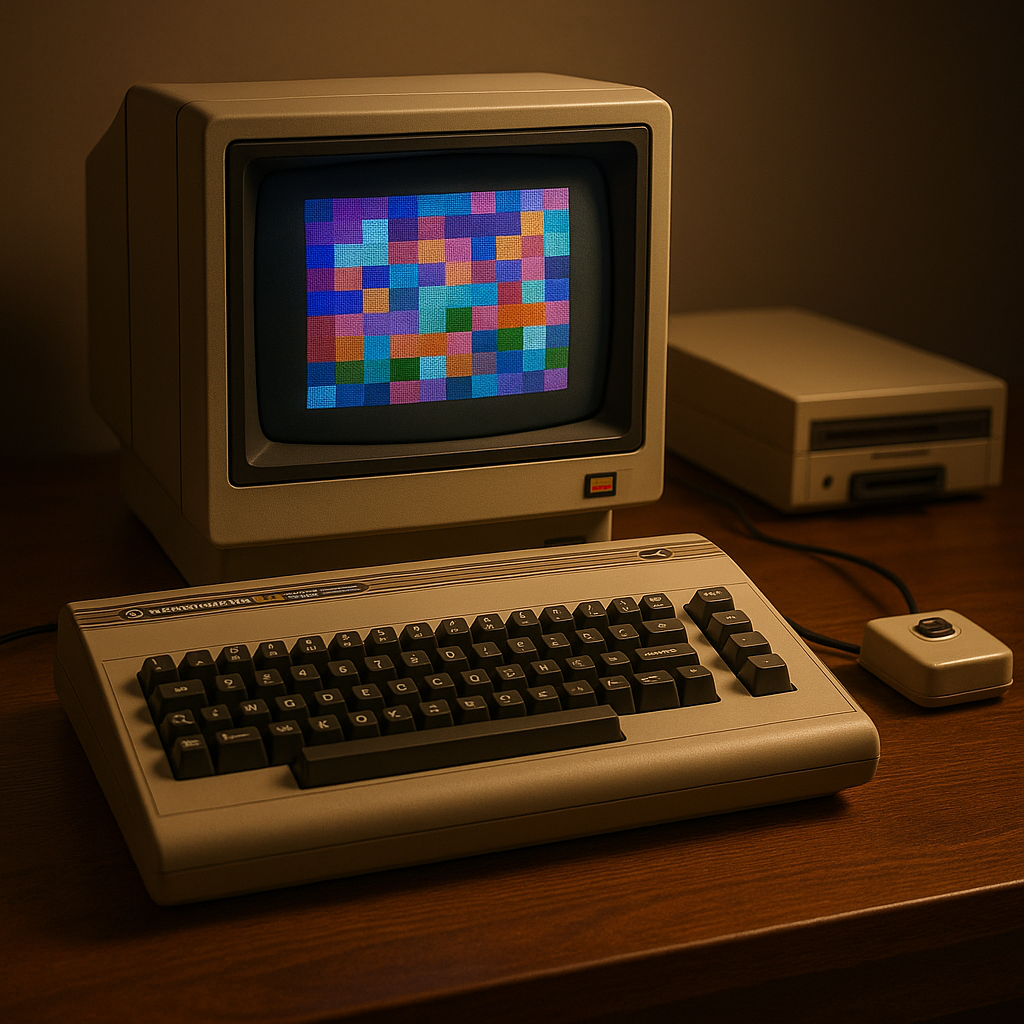
Technical specifications
| Element | Details |
|---|---|
| Processor | MOS Technology 6510 at 1.02 MHz |
| RAM | 64 KB RAM |
| Graphics | VIC-II chip 16 colors, resolution 320×200 |
| Audio | SID 6581 chip: 3-voice sound synthesis |
| Storage | Cassette, 5.25″ floppy disk, cartridges |
| Operating system | Built-in BASIC 2.0 |
Why such success?
An unmatched quality-price ratio
At a time when the cost of a microcomputer often soared beyond 1,000 francs, the Commodore 64 arrived below the 600 franc mark. This strategy discouraged many potential buyers from turning to overly expensive professional solutions, offering both a family computer and a home console. Beyond pricing, Commodore also mastered the production of its chips, thus reducing production costs and… the final price for the consumer.
A vast game library
Looking at the diversity of available titles, one crosses an ocean of styles: platformers, simulations, puzzles, shoot ’em ups, and even early role-playing game attempts. Independent publishers like Electronic Arts or Activision immediately saw the interest in offering versions adapted to this very widespread configuration. This creative effervescence was fueled by accessible development tools, propelling both the amateur and professional scenes into a constant race for innovation.
Native Support for Magnetic Media
The loading speed of a floppy disk compared to a cassette, the ease of navigating a menu, or the option to combine two media in the same project: the C64 offers a range of possibilities rarely available at the time. These features guarantee versatile use, both in office work and entertainment. To place this success in a broader historical perspective, one can consult the timeline of gaming computers, which traces the evolution of machines up to today’s home PCs.
Market Competitors
- Atari 800: a robust machine, but often more expensive and less well distributed in Europe.
- ZX Spectrum: an undisputed British success, but limited to a palette of 8 colors and rudimentary sound.
- Apple II: favored by schools and professional environments, it remains out of reach for the average gamer.
Each of these alternatives brings its share of innovations, but none truly manages to combine the price, graphic performance, and accessibility of the Commodore 64.
Legacy and Posterity
Forty years after its release, the machine has lost none of its aura. Communities of enthusiasts organize meetings, still develop games, and keep alive an ecosystem of brand-new cartridges and floppy disks. Between emulation and refurbished hardware, the C64 is endlessly reinvented, proving that well-designed lines of code transcend generations.
FAQ
What makes the Commodore 64 so popular?
Its unique combination of performance, affordable cost, and a rich game library explain its worldwide success.
How many units were sold?
It is estimated that more than 17 million units were sold between 1982 and 1994.
Which machines competed with it?
In the micro-gaming segment, the Atari 800, ZX Spectrum, and Apple II competed to attract players.
Can a Commodore 64 still be used today?
Yes: thanks to emulation, hardware reconfigurations, and restoration kits, it is possible to run it on modern screens.
