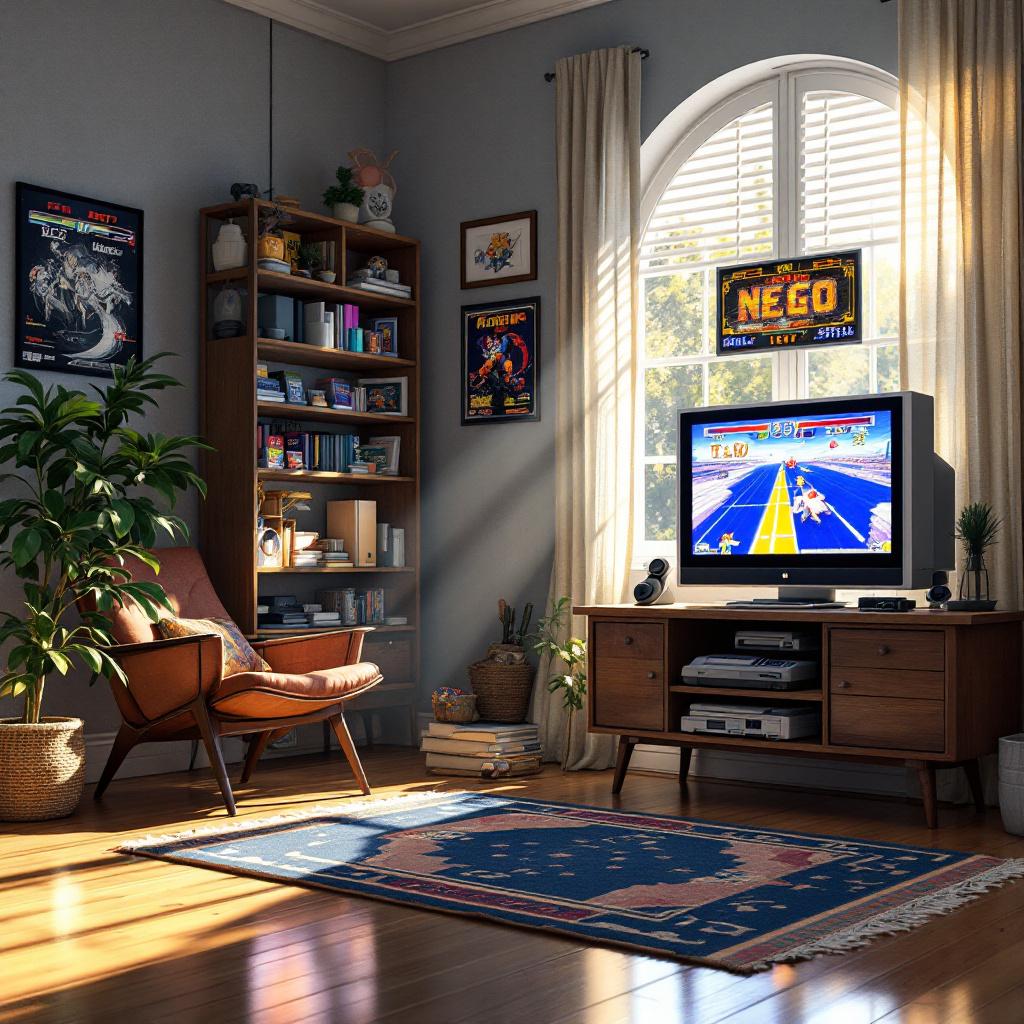
When the Neo-Geo AES was released at the end of 1990, it shifted the home video game universe into another dimension. Designed by SNK to bring arcade quality into the living room, it established itself as the most expensive and ambitious console of its time. Between powerful components and a library of iconic titles, the AES remains an object of fascination for collectors and retro-gaming enthusiasts.
Sommaire
In brief
🎮 Neo-Geo AES offers a direct port of SNK arcade games thanks to an architecture almost identical to the MVS board, guaranteeing unmatched graphics and sound in 1990.
⚙️ The machine integrates a Motorola 68000 CPU at 12 MHz, 64 KB of video RAM, and a cartridge slot synonymous with versatility, but carries a retail price above 500 francs.
🏆 Compared to the Amiga 500 and Atari ST, the AES stood out with massive sprites and high-res resolution, but without the multitasking or flexibility of contemporary computers.
Origin and ambition of the Neo-Geo AES
Strong arcade roots
At the heart of SNK’s innovation, the Neo-Geo project aimed to reduce the gap between the arcade cabinet and the living room. Engineers installed a board identical to the MVS (Multi Video System) version in a more compact and sober casing. The master idea was to allow players to enjoy titles like Fatal Fury or Art of Fighting without graphical or sound compromises.
A premium offer with a unique positioning
Instead of a mass-market console, SNK chose a high-end approach: the complete pack included the console, two ergonomic controllers, and a unit cost for cartridges often exceeding 200 €. It was a bold bet, relying on a clientele ready to invest for total arcade authenticity. The ambition was clear: to push technical limits and make the AES an unmatched reference.
A high-end arcade at home
Performance and technical innovations
The main advantage of the AES lay in its Motorola 68000 processor clocked at 12 MHz, supported by a second Zilog Z80 processor for audio management. Dedicated circuits could display up to 380 sprites simultaneously, releasing a palette of 65,536 colors and 15-bit stereo sound. The visual rendering, previously impossible on a home console, offered fluidity and detail richness close to the reality of the arcade room.
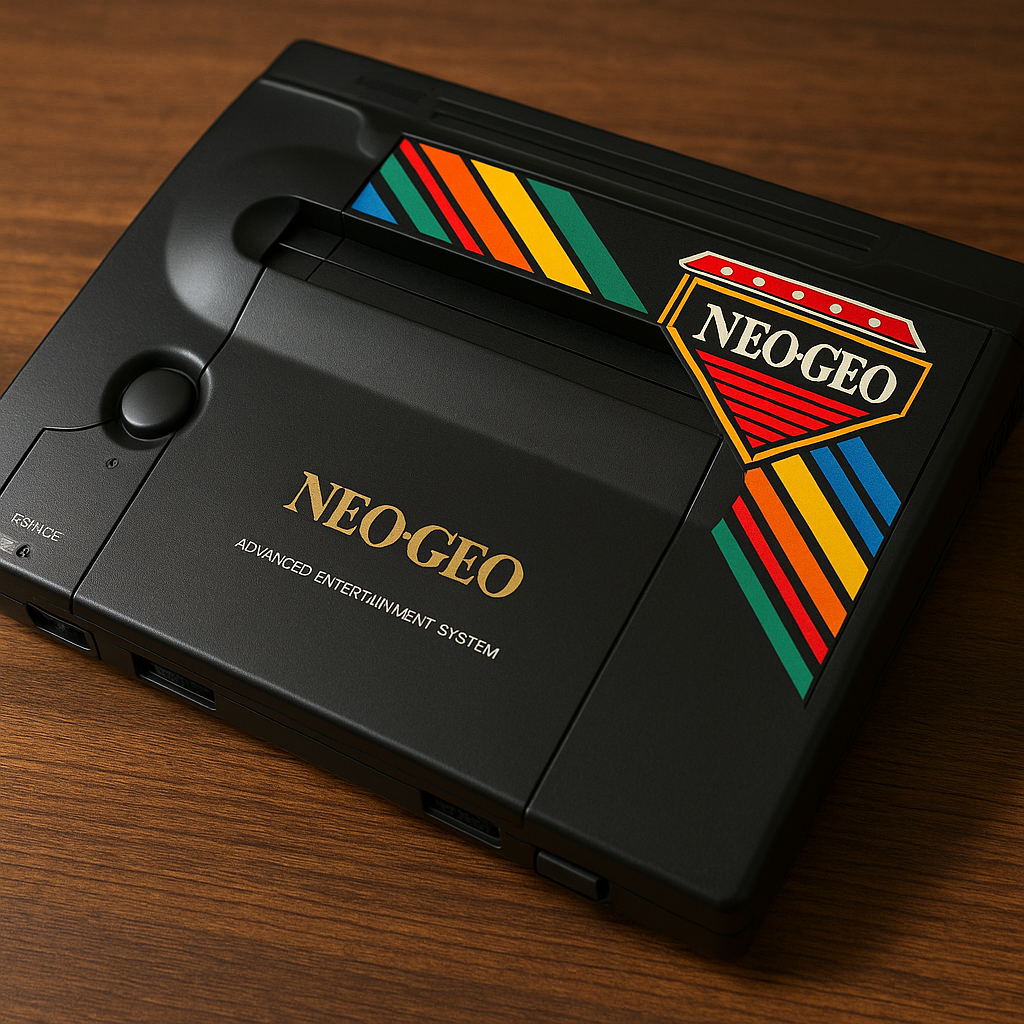
Technical specifications
| Component | Specification |
|---|---|
| Main CPU | Motorola 68000 @ 12 MHz |
| Sound processor | Zilog Z80 @ 4 MHz |
| Video RAM | 64 KB |
| System RAM | 72 KB |
| Resolution | 320×224 pixels |
| Palette | 65,536 colors |
| Media | Neo-Geo AES cartridges |
Competition and Technical Context
Contemporary Computers
In the early 1990s, the Amiga 500 and Atari ST dominated homes favorable to multimedia entertainment. They offered a more versatile ecosystem, integrating disk, floppy drive, and multitasking, but their GPU was often limited to a few dozen sprites. The Neo-Geo AES, on the other hand, focused all its energy on high-level graphic performance and immersive stereo sound, sacrificing software flexibility for a pure arcade experience.
Consoles and Missteps
During the same period, the Super Nintendo and Mega Drive took the opposite approach by betting on accessibility and a rich catalog of exclusives. The AES would take several years to expand, due to a lack of multiplatform partnerships, and remained confined to a niche clientele, ready to pay more for an arcade-faithful rendering.
To grasp the overall evolution of video game machines, one can consult a detailed overview of the history of video game consoles, where each generation is described in its technical and commercial context.
Flagship Games and Cultural Impact
Some titles contributed to the legend of the Neo-Geo: King of Fighters laid the foundations of team versus fighting, while Metal Slug redefined the run’n’gun genre thanks to detailed animations and constant winks. These cartridges, often accompanied by flamboyant covers, were priced equivalent to a high-end PC game.
Tournaments organized in specialized stores forged a close-knit community of players, ready to travel several hundred kilometers to battle on near-arcade hardware. This enthusiasm already foreshadowed e-sports, demonstrating that the passion for video game performance transcends platforms.
Legacy and Collection Today
Thirty years later, the Neo-Geo AES has become a grail for retrogaming enthusiasts. Cartridges in good condition trade for thousands of euros, and some sealed bundles easily exceed €10,000. The machine also inspired reissues, such as SNK’s Neo-Geo Mini, adopting the same concept in a reduced format.
Collectors or nostalgics agree on one point: the Neo-Geo AES was not just a console, but a testament to the golden age of home arcade gaming, where every pixel was crafted to captivate.
FAQ
-
What is the difference between Neo-Geo AES and MVS?
The AES is the home version of the arcade MVS board, with the same hardware but a case designed for the living room and adapted controllers. -
Why were AES games so expensive?
The cartridges included special chips (MROM, SROM) and custom hardware to faithfully reproduce the arcade experience, which increased manufacturing costs. -
Can you play local multiplayer?
Yes, up to two players simultaneously with official controllers, and even four via a third-party multitap, highly prized during competitions.
